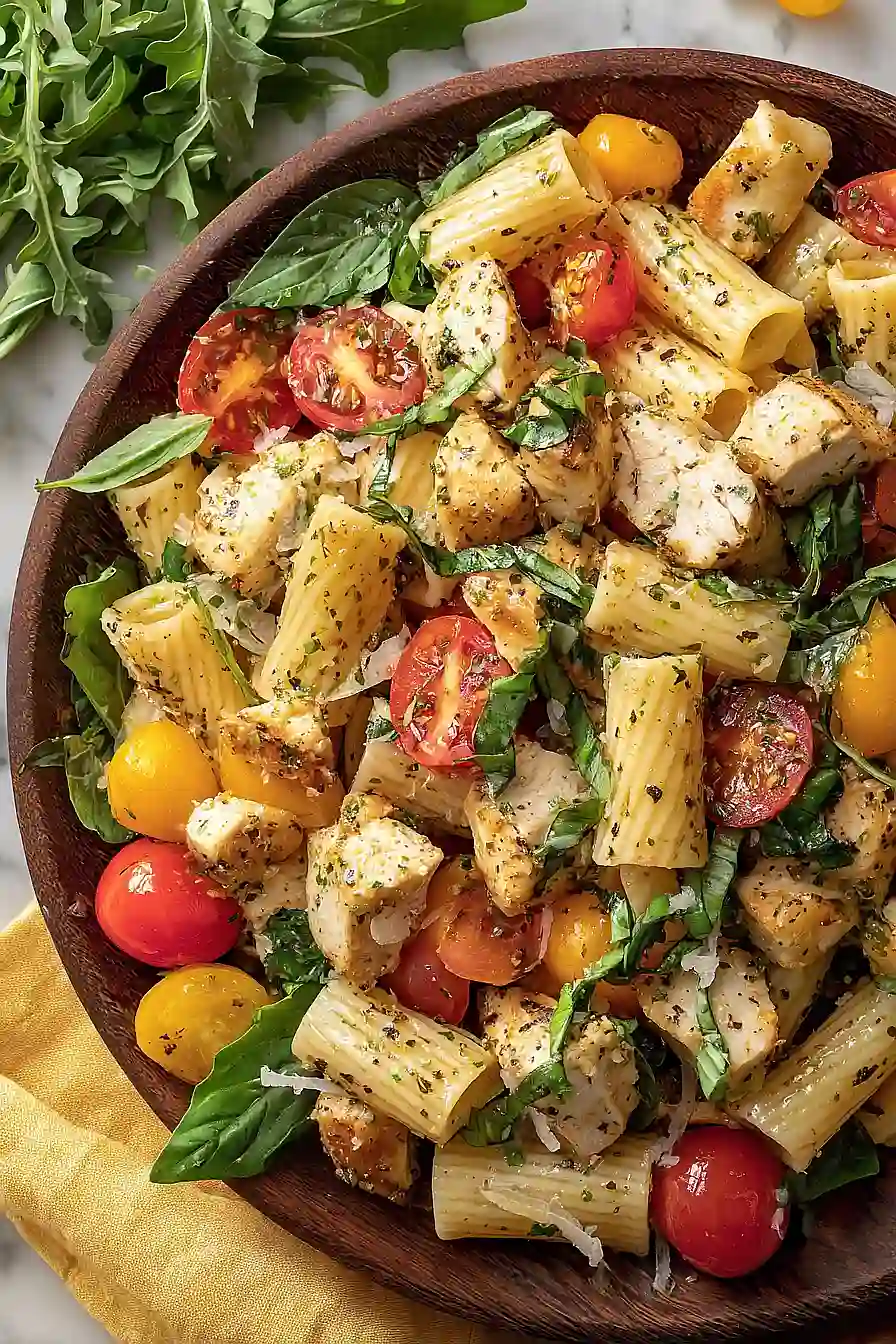
While you prepare ingredients, bring a large pot of salted water to a boil and cook the rigatoni until al dente according to package directions, then drain and spread on a baking sheet or large bowl to cool. This parallel timing saves significant overall cook time. While the pasta cooks, halve the grape tomatoes lengthwise, tear the basil into ½-inch pieces, and measure out all remaining ingredients. I always spread the hot pasta out rather than leaving it in the pot—this stops the cooking process and prevents it from becoming mushy.
Pat the chicken pieces dry with paper towels, then toss with Italian seasoning, dried oregano, salt, and pepper in a bowl. Heat olive oil in a large skillet over medium-high heat until shimmering. Working in batches if needed to avoid overcrowding, sear the chicken for 8 minutes per side until golden brown and cooked through. Transfer to a plate and let rest for 10 minutes—this allows the juices to redistribute, keeping the chicken tender and moist.
While the chicken rests, whisk together the olive oil, red wine vinegar, Dijon mustard, freshly pressed garlic, salt, and pepper in a small bowl until emulsified. Taste and adjust seasoning as needed. I find that freshly pressed garlic gives a sharper, more vibrant bite compared to minced, which is essential for cutting through the richness of the cheese and oil.
Transfer the cooled pasta to a large mixing bowl. Add the rested chicken, halved tomatoes, roasted red peppers, olives, and capers, then pour the vinaigrette from Step 3 over everything. Toss gently but thoroughly to coat all components evenly. Sprinkle the Parmesan cheese over the salad and toss again to distribute.
Gently fold in the arugula and torn basil from Step 1 just before serving—adding them at the end prevents wilting and preserves their fresh, peppery flavor. Divide among serving plates or bowls and serve at room temperature or chilled, depending on your preference.