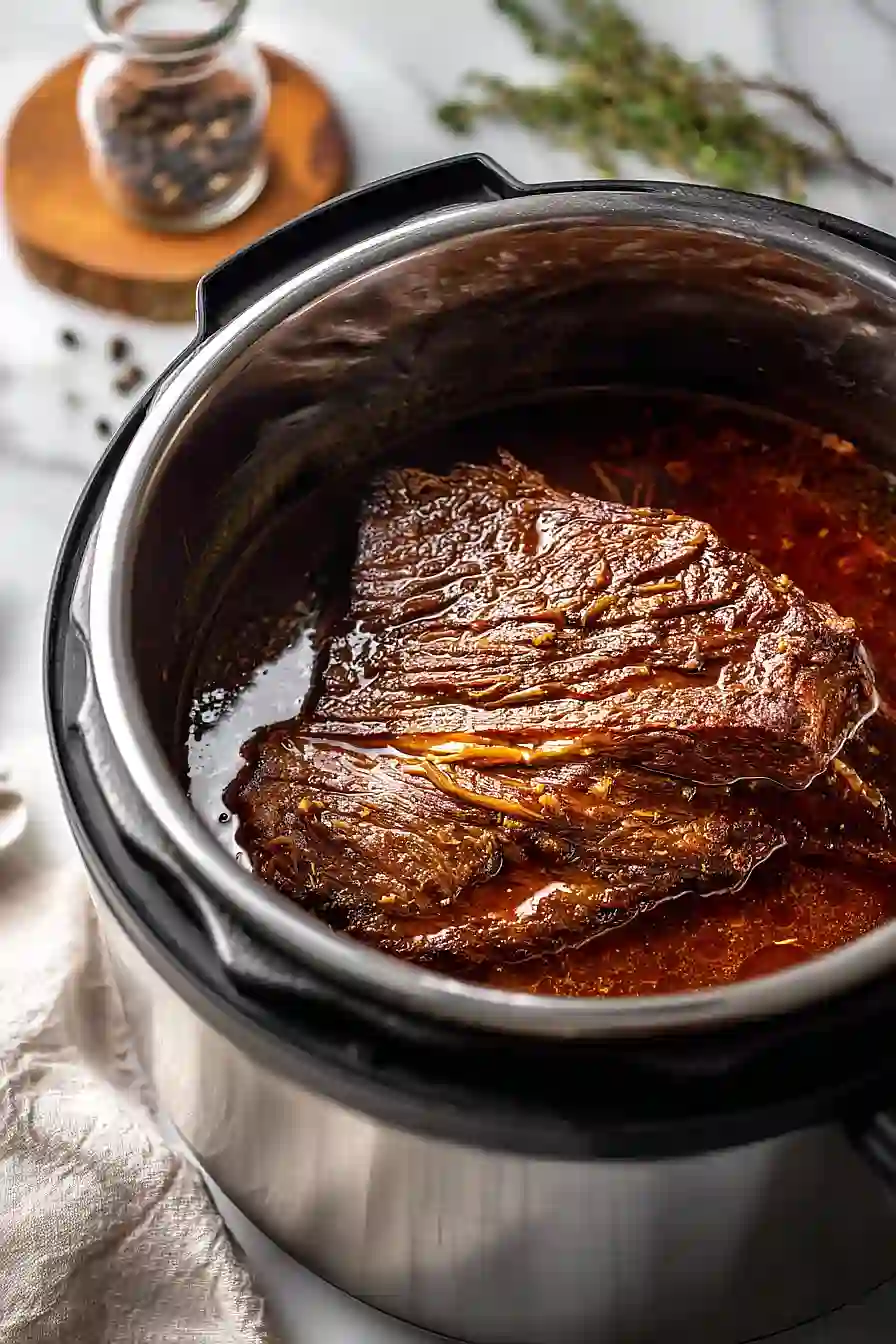
Trim any excess fat from the brisket, leaving about a 1/4-inch layer for flavor and moisture. Pat the meat dry with paper towels—this is crucial for getting a good sear. Season generously on all sides with 2 1/4 teaspoons kosher salt and 3/4 teaspoon freshly ground black pepper, rubbing the seasonings in so they adhere well. While the brisket rests, thinly slice the large yellow onion into 1/4-inch rings and have all your sauce ingredients measured and ready nearby.
Set your Instant Pot to the sauté function on high heat and let it preheat for 2-3 minutes. Add 1 tablespoon vegetable oil and wait for it to shimmer. Place the seasoned brisket fat-side down in the pot and sear for 5-6 minutes without moving it—you want a deep brown crust to develop. Flip and sear the other side for another 5-6 minutes until well-browned. I find this browning step is essential because it creates a flavorful crust and adds depth to the final dish. Remove the brisket to a plate and set aside.
With the sauté function still on, add the sliced onions to the residual oil and fat in the pot, then sprinkle with 1/2 teaspoon kosher salt to help them release their moisture. Sauté for 4-6 minutes, stirring occasionally, until the onions become soft and slightly golden. Pour in 1/2 cup beef stock and use a wooden spoon to deglaze the pot, scraping up all the browned bits from the bottom—these caramelized bits are packed with flavor. Stir in the 1/3 cup red wine vinegar, 1/3 cup ketchup, and 3 tablespoons packed brown sugar, then add the dried thyme, oregano, smoked paprika, garlic powder, Worcestershire sauce, and bay leaf, mixing until well combined.
Return the seared brisket to the pot, nestling it into the onion and sauce mixture. The liquid should come about halfway up the sides of the meat—this is the perfect amount for pressure cooking. Turn off the sauté function, close and seal the lid, then select high pressure and set the timer for 70 minutes. The Instant Pot will take about 10-15 minutes to come to pressure before the actual cooking time begins.
When the cooking cycle is complete, let the pressure release naturally for 20-25 minutes—this gradual release allows the meat to relax and reabsorb its juices, keeping it incredibly tender. After the natural release, if there's still pressure in the pot, carefully turn the valve to quick-release any remaining steam. Open the lid carefully, tilting it away from you to avoid the steam.
Transfer the brisket to a cutting board and let it rest for 5 minutes—I always do this before slicing to ensure maximum juiciness and clean cuts. Using a sharp knife, slice the brisket against the grain into 1/2-inch thick slices; cutting against the grain shortens the muscle fibers, making each bite more tender. Arrange the sliced brisket on a serving platter and pour the onions and sauce over the top. Garnish with fresh parsley and serve immediately.