Cut the pork and beef into 1/2-inch cubes and place on a parchment-lined tray in the freezer for at least 2 hours until they reach 32°F-34°F; this cold temperature is crucial for creating a proper emulsion and preventing the fat from smearing during grinding. Simultaneously, prepare your sausage-making equipment: soak the hog casings in cool water for 30 minutes to soften them, and chill your grinder parts (blade, die, and bowl) in the freezer for at least 1 hour. I always chill my equipment thoroughly because warm surfaces will cause the meat to warm up too quickly during grinding, which breaks down the fat and results in a greasy, separated sausage.
While the meat freezes, cook the bacon in a skillet over medium heat until it's crispy and rendered, about 8-10 minutes; drain it on paper towels and chop into 1/4-inch bits once cooled. Seed the jalapeños by halving them lengthwise and using a small spoon to scrape out the ribs and seeds (remove as many seeds as you're comfortable with—they add heat), then finely dice into 1/8-inch pieces and set aside. Cut the cream cheese into 1/4-inch cubes and place on a small parchment-lined tray in the freezer for at least 1 hour; the cream cheese must be partially frozen so it doesn't smear into the meat during grinding and instead creates pockets of creamy richness throughout the sausage.
Remove the chilled meat, fat, bacon, jalapeños, and frozen cream cheese from the freezer and grind them together using the cold grinder with a 3/16-inch die (or whatever grinding plate produces a medium grind). Working quickly to keep everything cold, transfer the ground mixture to a chilled mixing bowl. Add the salt, pink salt, dry milk, garlic powder, onion powder, coriander, black pepper, cayenne, and smoked paprika, then pour in the ice-cold water. Using a stand mixer fitted with a paddle attachment (or mixing by hand with a wooden spoon), mix on medium speed for 3-5 minutes until the mixture becomes sticky and develops a tacky sheen—this is when the meat proteins begin to bind with the fat and emulsify, creating the proper structure.
Fit your sausage stuffer with the soaked hog casing, leaving about 4 inches hanging loose to tie off at the end. Stuff the sausage mixture from Step 3 into the casings with steady, even pressure, filling them until they're plump but not overstuffed (they should feel firm but not drum-tight). Divide the long strand into individual links by pinching and twisting at 4-6 inch intervals, then tie off the ends with kitchen twine or use a sausage linker. As you finish each link, use a sterile needle or pricking tool to poke 2-3 small holes near the top to release any air pockets that can create hollow spots during smoking. I prefer to work quickly and chill the stuffed sausages for at least 30 minutes before smoking, which helps them hold their shape better during the initial heating phase.
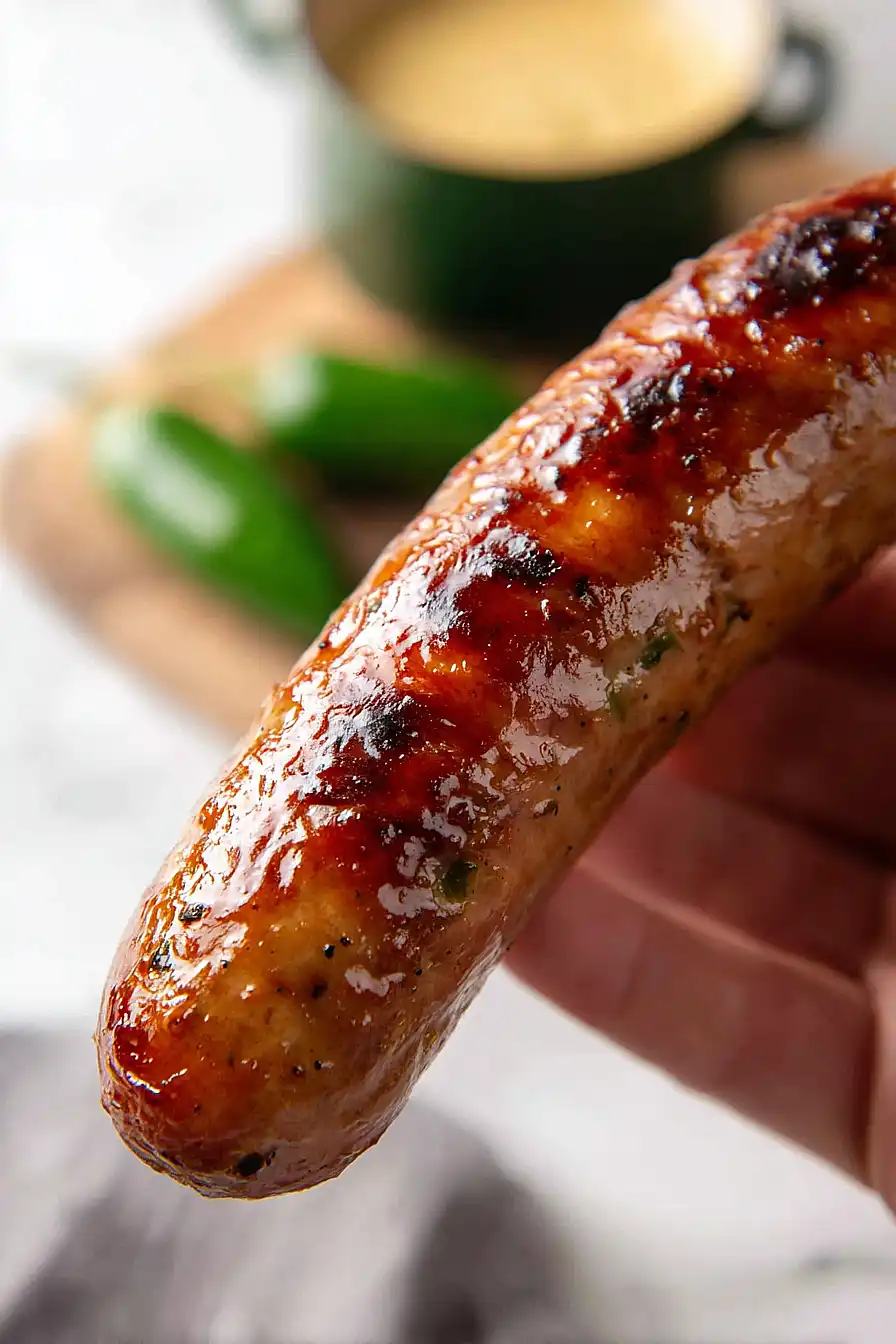
Place the prepared sausage links on a smoker rack or grid, leaving space between each link for smoke circulation. Heat your smoker to 100°F and place the sausages inside for 1 hour to allow the casing to dry and form a pellicle (a thin, sticky layer that helps smoke adhere). Increase the temperature to 125°F, add your choice of mild hardwood smoke (oak, cherry, or apple work well with jalapeños and bacon), and smoke for 1 hour. Raise the temperature to 145°F and continue smoking for 2 hours, then increase to 155°F and smoke for another 2 hours until the sausages develop a deep mahogany color. Finally, raise the temperature to 180°F and continue heating until the internal temperature reaches 145°F when measured with a meat thermometer inserted into the thickest sausage, which typically takes another 1-2 hours.
Remove the smoked sausages from the smoker and immediately place them into a bowl or bath of ice water to rapidly chill them to below 70°F; this stops the cooking process and sets the texture. Let them sit in the ice bath for 10-15 minutes, then remove and pat dry with paper towels. Allow the sausages to come to room temperature on a clean surface for about 2 hours before serving or storing; this resting period allows the flavors to meld and the texture to firm up slightly as the meat cools completely. The sausages can now be sliced and served fresh, or wrapped individually and refrigerated for up to 5 days or frozen for up to 3 months.