Finding a creamy, satisfying pasta dish that doesn’t rely on heavy cream can feel like an impossible task. Let’s face it, most salmon pasta recipes call for cups of cream or half-and-half, which can leave you feeling weighed down and reaching for the antacids before dinner’s even over.
That’s exactly why I created this salmon pasta without cream – it delivers all the rich, comforting flavors you’re craving, but uses simple milk and freshly grated parmesan instead. The result is a lighter take on the classic that still feels indulgent, and it comes together in about 30 minutes on a busy weeknight.
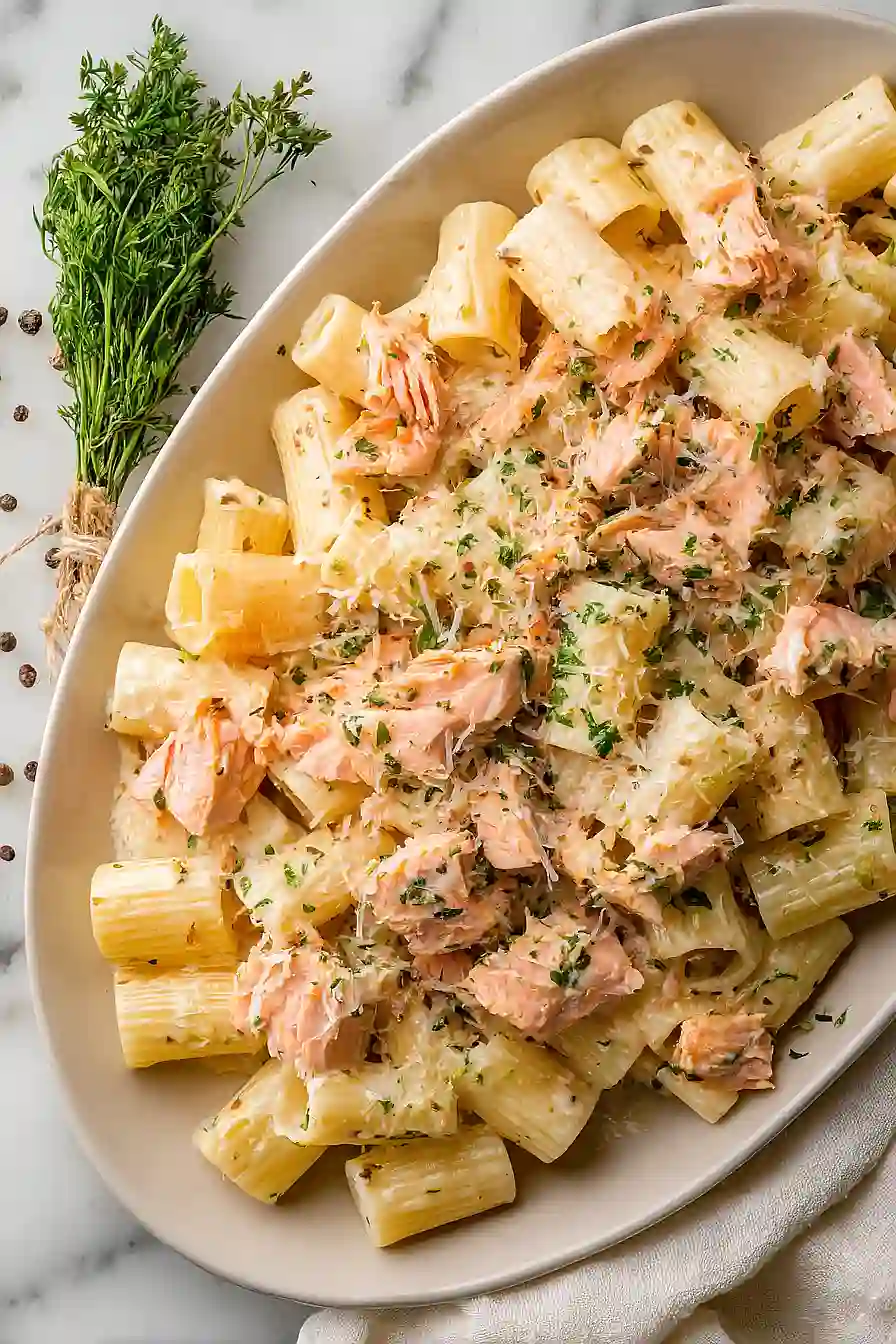
Why You’ll Love This Salmon Pasta
- Quick weeknight dinner – Ready in just 20-30 minutes, this recipe is perfect for busy evenings when you want something satisfying without spending hours in the kitchen.
- No heavy cream needed – This lighter version uses milk and pasta water to create a silky sauce that coats every strand of pasta without feeling too rich or heavy.
- Restaurant-quality at home – The combination of flaky salmon, garlic, and parmesan makes this taste like something you’d order at an Italian restaurant, but you’re making it in your own kitchen.
- Simple ingredients – You probably have most of these pantry staples on hand already, and the ingredient list is short and straightforward.
- High-protein meal – With salmon and parmesan, you’re getting plenty of protein to keep you full and satisfied long after dinner.
What Kind of Salmon Should I Use?
You can choose farm-raised or wild for this recipe, both will work just fine. And if all you have access to is frozen salmon, don’t worry – you’ll still get great results. In fact, most fresh salmon at the supermarket has been previously frozen right off the boat, so there’s really no difference in quality. For this pasta dish, you’ll want to remove the skin before cooking since it won’t add much to the creamy sauce. Just check that your salmon doesn’t have any bones by running your fingers along the flesh, and use tweezers to pull out any pin bones you find.
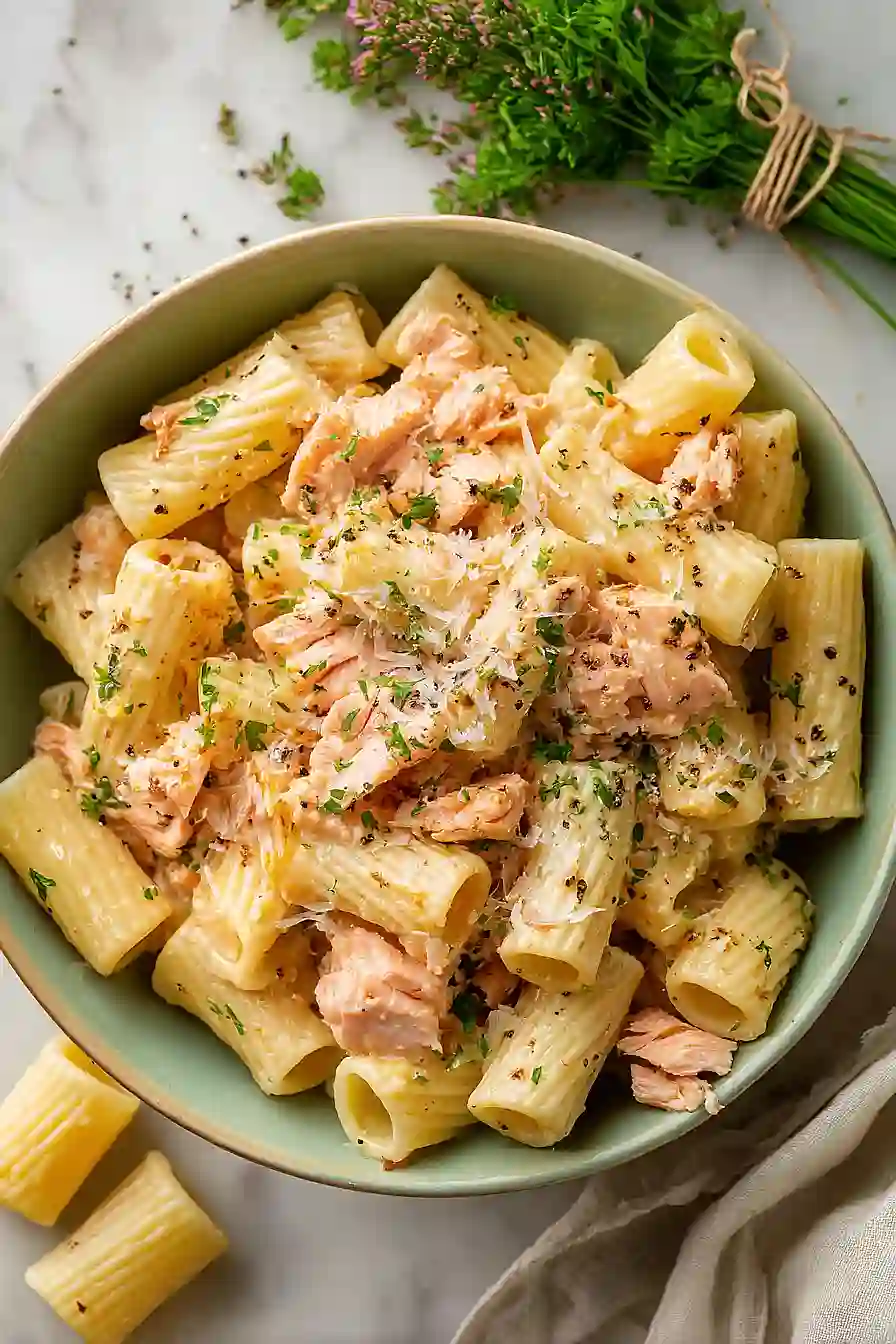
Options for Substitutions
This salmon pasta is pretty forgiving when it comes to swaps:
- Salmon: Fresh salmon works best here, but you can use frozen salmon fillets – just thaw them completely and pat dry before cooking. In a pinch, canned salmon works too, though you’ll want to drain it well and add it at the end since it’s already cooked.
- Pasta: Any pasta shape will do the job. Penne, fettuccine, or spaghetti are all great choices. Just cook according to package directions and remember to save that pasta water.
- Milk: You can swap regular milk for any plant-based milk like oat or almond milk. Whole milk gives the creamiest result, but 2% works fine too.
- Parmesan: Freshly grated parmesan is ideal and melts better than pre-shredded, but the pre-shredded stuff will work if that’s what you have. Pecorino Romano makes a good substitute if you want a sharper flavor.
- Butter and olive oil: You can use all olive oil instead of butter if needed, though the butter does add nice richness. Use about 3 tablespoons of olive oil total if skipping the butter.
- Fresh parsley: Dried parsley works in a pinch – use about 1/2 teaspoon since dried herbs are more concentrated. Fresh basil or dill also pair nicely with salmon.
Watch Out for These Mistakes While Cooking
The biggest mistake when making salmon pasta is overcooking the fish, which turns it dry and chalky – aim for salmon that’s just cooked through with a slightly pink center, since it will continue cooking when you add it back to the hot pasta.
Another common error is draining your pasta completely and forgetting to save that starchy pasta water, which is what helps create a silky sauce that clings to the noodles without needing heavy cream.
Don’t add all your salmon to the sauce in step 7 – using just 20% helps build flavor in the sauce while keeping the rest of the chunks intact for texture, and make sure your heat isn’t too high when you add the milk and cheese or the sauce can break and become grainy.
Finally, if your sauce looks too thick, add pasta water a splash at a time rather than dumping it all in at once, which gives you better control over the final consistency.
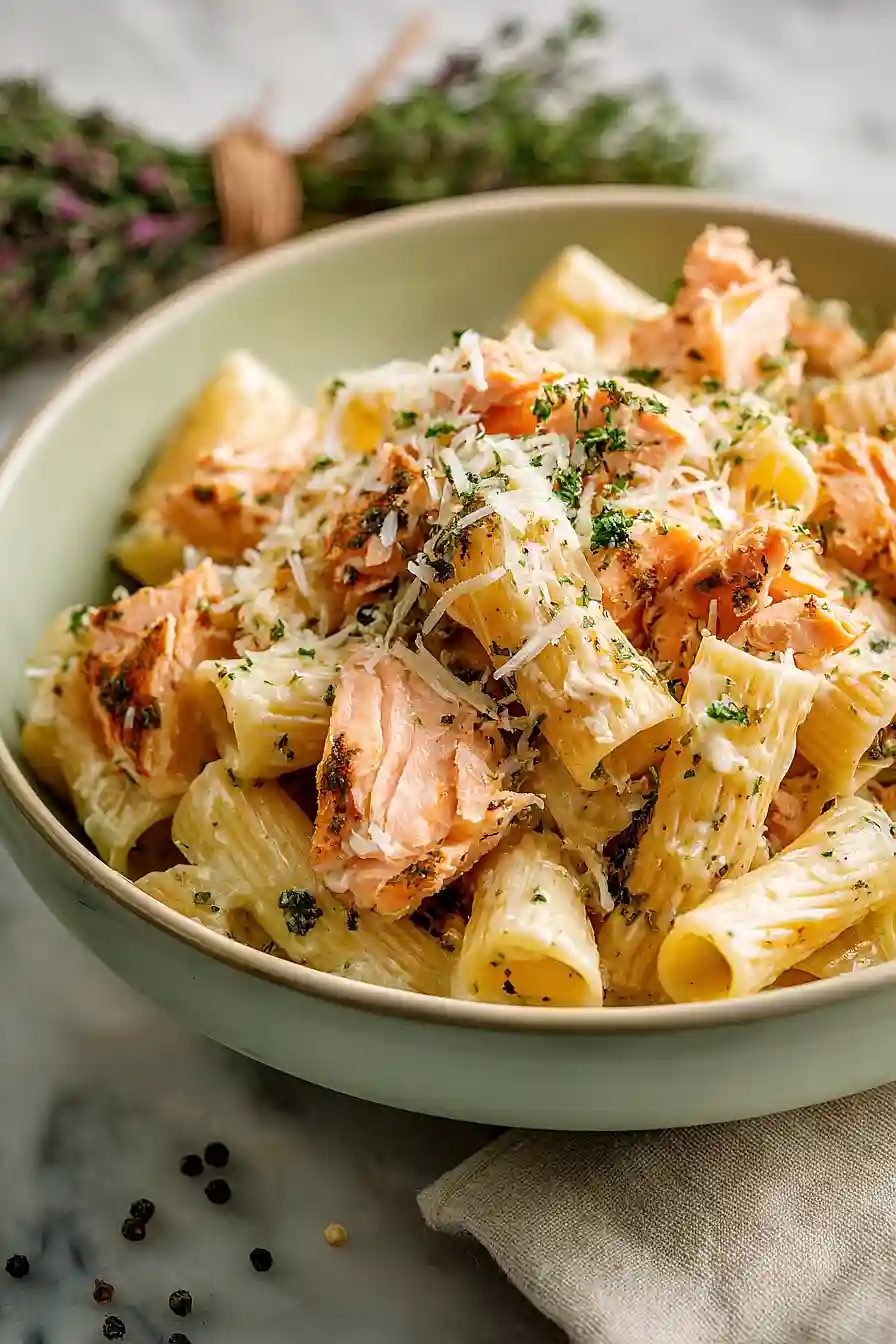
What to Serve With Salmon Pasta?
This salmon pasta is pretty filling on its own, so I like to keep the sides simple and fresh. A crisp green salad with lemon vinaigrette is my go-to because the acidity cuts through the richness of the pasta and complements the salmon really nicely. Garlic bread or a warm baguette is always a good call if you want something to mop up any extra sauce at the bottom of your bowl. If you’re feeding a crowd, roasted asparagus or green beans tossed with a bit of olive oil and lemon make great veggie sides that don’t compete with the main dish.
Storage Instructions
Store: Keep your leftover salmon pasta in an airtight container in the fridge for up to 3 days. The salmon stays moist and the flavors actually blend together even better overnight, making it a great option for meal prep or next-day lunches.
Freeze: While you can freeze this pasta for up to 2 months in a freezer-safe container, just know that the texture of the salmon might change slightly when thawed. If you’re planning to freeze it, I’d recommend slightly undercooking the pasta so it doesn’t get mushy when reheated.
Reheat: Warm it up gently on the stovetop over medium-low heat with a splash of milk or pasta water to loosen the sauce. You can also microwave it in 30-second intervals, stirring between each one. Add a little extra parmesan on top when serving to freshen it up!
| Preparation Time | 10-15 minutes |
| Cooking Time | 10-15 minutes |
| Total Time | 20-30 minutes |
| Level of Difficulty | Medium |
| Servings | 4 servings |
Estimated Nutrition
Estimated nutrition for the whole recipe (without optional ingredients):
- Calories: 2300-2500
- Protein: 120-135 g
- Fat: 110-125 g
- Carbohydrates: 185-200 g
Ingredients
For the pasta and salmon:
- 14 oz pasta (I use Barilla Penne for its sturdy texture)
- 1 lb salmon (cut into 1-inch bite-sized chunks)
- 3 tbsp olive oil
- salt
- black pepper
For the sauce:
- 1/2 cup onions (finely diced into 1/4-inch pieces)
- 2 tbsp butter (I prefer Kerrygold for a richer flavor without cream)
- 4 garlic cloves
- 1.5 tsp dried parsley
- 1/2 tsp fresh lemon zest
- 1/2 cup milk (lukewarm to prevent the sauce from breaking)
- 1 cup parmesan (freshly grated for a smoother melt)
- red pepper flakes
- 1 cup pasta water
Step 1: Prepare Mise en Place and Start Pasta
- 14 oz pasta
- salt
- 1/2 cup onions
- 4 garlic cloves
- 1 cup parmesan
Bring a large pot of salted water to a boil and add the pasta, cooking until just al dente according to package directions.
While the pasta cooks, dice the onions into 1/4-inch pieces, mince the garlic cloves, and grate the parmesan cheese.
When the pasta is done, reserve 1 cup of the pasta water before draining—this starchy liquid is essential for creating a silky sauce without cream.
Set the drained pasta aside.
Step 2: Sear the Salmon
- 1 lb salmon
- salt
- black pepper
- 3 tbsp olive oil
Pat the salmon chunks dry with paper towels and season generously with salt and black pepper on all sides.
Heat 3 tablespoons of olive oil in a large skillet over medium-high heat until shimmering.
Add the salmon and cook for 3-4 minutes without moving it—this develops a golden exterior and keeps the fish moist inside.
Flip each piece and cook for an additional 2-3 minutes until cooked through.
Transfer the salmon to a plate; I like to break the larger pieces into smaller, bite-sized chunks at this point to ensure even distribution throughout the dish.
Step 3: Build the Sauce Base with Aromatics
- cooked salmon from Step 2
- 1/2 cup onions
- 2 tbsp butter
- 4 garlic cloves
- 1.5 tsp dried parsley
- red pepper flakes
- black pepper
In the same skillet with the salmon fat, add the diced onions and cook for about 1 minute until they begin to soften and become translucent.
Add the 2 tablespoons of butter along with the minced garlic and dried parsley, cooking for just 30 seconds—this blooms the garlic and allows the butter to carry these flavors without burning them.
Add about 20% of the cooked salmon pieces back to the pan along with a generous pinch of red pepper flakes and black pepper, cooking for another 30 seconds to marry the flavors.
I find that adding a portion of the salmon early helps build a richer, more integrated sauce.
Step 4: Create the Silky Sauce
- 1/2 cup milk
- 1/2 cup pasta water from Step 1
- 1 cup parmesan
Slowly pour in the lukewarm milk, stirring constantly to prevent lumps from forming.
Add 1/2 cup of the reserved pasta water and the freshly grated parmesan cheese, stirring until the cheese melts smoothly into a silky sauce.
Cook for about 1 minute, allowing the sauce to thicken slightly.
The pasta water adds a subtle starch that helps the sauce cling to the pasta, while the milk keeps it delicate and light—no heavy cream needed.
Step 5: Combine Pasta and Salmon
- cooked pasta from Step 1
- remaining cooked salmon from Step 2
Add the cooked pasta from Step 1 to the sauce, stirring gently to coat every strand.
Add the remaining salmon pieces (about 80% of the total) and toss everything together over medium heat for 30 seconds to warm through.
If the pasta looks dry or the sauce seems too thick, add more of the reserved pasta water, a splash at a time, until you reach a silky consistency that lightly coats each piece of pasta.
Step 6: Finish and Serve
- 1/2 tsp fresh lemon zest
- additional parmesan for garnish
- red pepper flakes
Divide the salmon pasta among serving bowls and garnish with fresh lemon zest, additional grated parmesan, and a final pinch of red pepper flakes if desired.
Serve immediately while the sauce is at its silkiest and the salmon is still warm.
Tasty Salmon Pasta Without Cream
Ingredients
Method
- Bring a large pot of salted water to a boil and add the pasta, cooking until just al dente according to package directions. While the pasta cooks, dice the onions into 1/4-inch pieces, mince the garlic cloves, and grate the parmesan cheese. When the pasta is done, reserve 1 cup of the pasta water before draining—this starchy liquid is essential for creating a silky sauce without cream. Set the drained pasta aside.
- Pat the salmon chunks dry with paper towels and season generously with salt and black pepper on all sides. Heat 3 tablespoons of olive oil in a large skillet over medium-high heat until shimmering. Add the salmon and cook for 3-4 minutes without moving it—this develops a golden exterior and keeps the fish moist inside. Flip each piece and cook for an additional 2-3 minutes until cooked through. Transfer the salmon to a plate; I like to break the larger pieces into smaller, bite-sized chunks at this point to ensure even distribution throughout the dish.
- In the same skillet with the salmon fat, add the diced onions and cook for about 1 minute until they begin to soften and become translucent. Add the 2 tablespoons of butter along with the minced garlic and dried parsley, cooking for just 30 seconds—this blooms the garlic and allows the butter to carry these flavors without burning them. Add about 20% of the cooked salmon pieces back to the pan along with a generous pinch of red pepper flakes and black pepper, cooking for another 30 seconds to marry the flavors. I find that adding a portion of the salmon early helps build a richer, more integrated sauce.
- Slowly pour in the lukewarm milk, stirring constantly to prevent lumps from forming. Add 1/2 cup of the reserved pasta water and the freshly grated parmesan cheese, stirring until the cheese melts smoothly into a silky sauce. Cook for about 1 minute, allowing the sauce to thicken slightly. The pasta water adds a subtle starch that helps the sauce cling to the pasta, while the milk keeps it delicate and light—no heavy cream needed.
- Add the cooked pasta from Step 1 to the sauce, stirring gently to coat every strand. Add the remaining salmon pieces (about 80% of the total) and toss everything together over medium heat for 30 seconds to warm through. If the pasta looks dry or the sauce seems too thick, add more of the reserved pasta water, a splash at a time, until you reach a silky consistency that lightly coats each piece of pasta.
- Divide the salmon pasta among serving bowls and garnish with fresh lemon zest, additional grated parmesan, and a final pinch of red pepper flakes if desired. Serve immediately while the sauce is at its silkiest and the salmon is still warm.