Here are my Vietnamese shrimp spring rolls, with fresh shrimp, crunchy vegetables, herbs, and soft rice noodles, all wrapped up in rice paper and served with a creamy peanut dipping sauce and a tangy fish sauce on the side.
These spring rolls are perfect for warm weather when you want something light and refreshing. I love making a big batch on the weekend because they keep well in the fridge, and my kids can just grab them for a quick lunch or snack throughout the week.
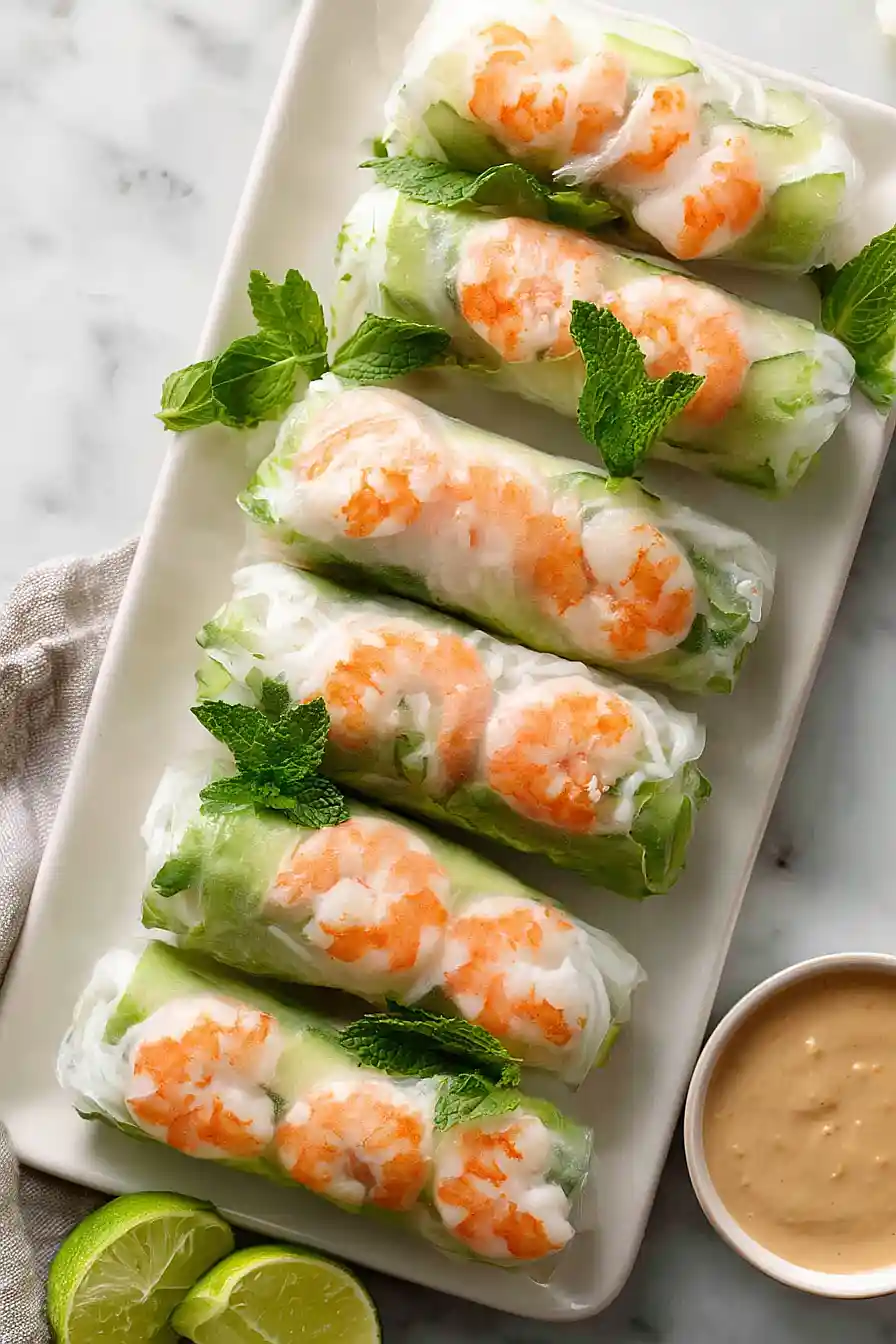
Why You’ll Love These Spring Rolls
- Fresh and healthy – Packed with crisp vegetables, herbs, and lean shrimp, these spring rolls are a light meal that won’t weigh you down but still keeps you satisfied.
- Fun to make – Rolling your own spring rolls is surprisingly easy once you get the hang of it, and it’s a great activity to do with family or friends.
- Customizable fillings – You can swap out vegetables based on what you have on hand or add extra herbs to suit your taste preferences.
- Two delicious dipping sauces – The creamy peanut sauce and tangy fish sauce dip give you options to match your mood, and both complement the fresh flavors perfectly.
- Make-ahead friendly – These spring rolls hold up well for a few hours in the fridge, making them perfect for meal prep, parties, or packed lunches.
What Kind of Shrimp Should I Use?
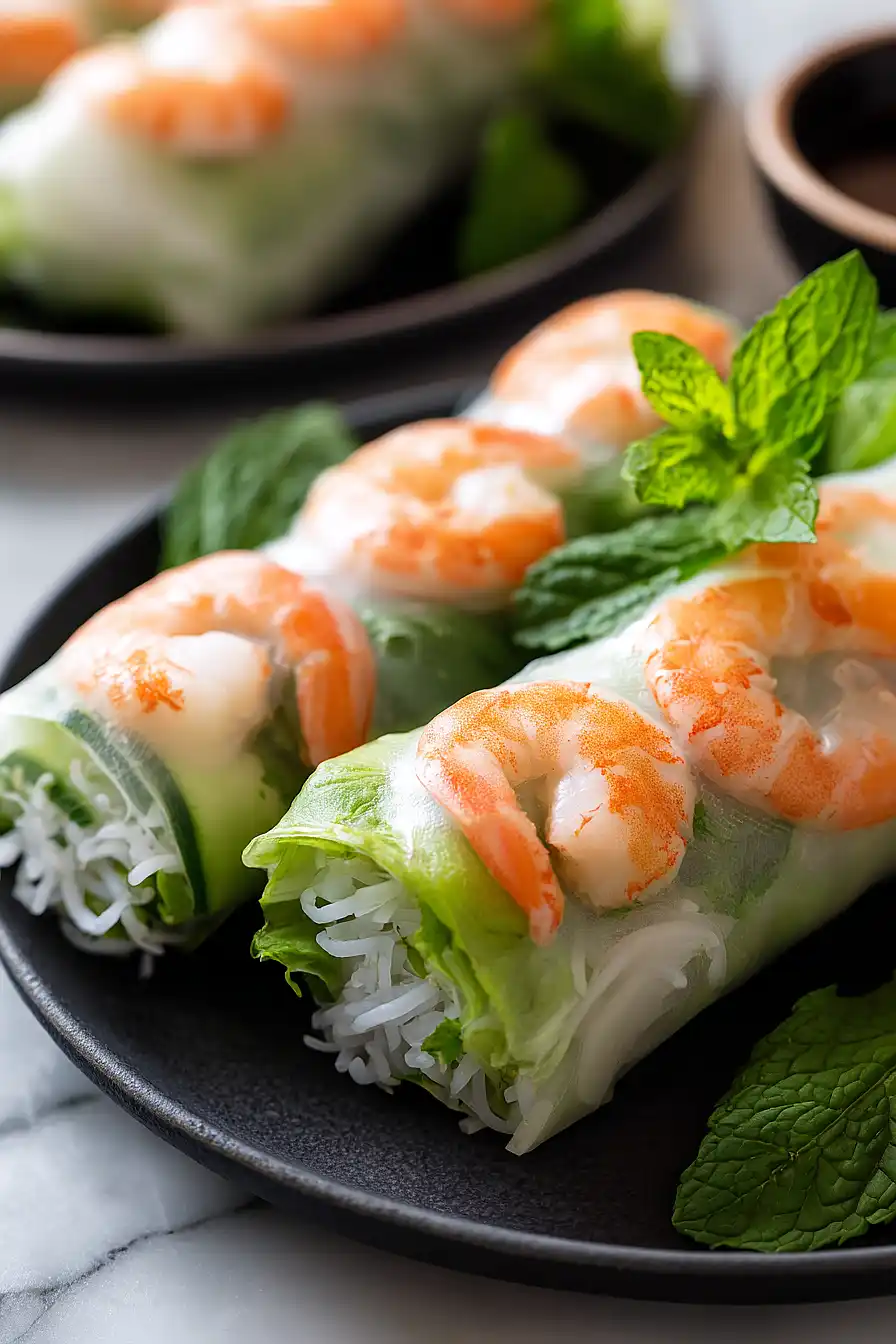
For spring rolls, you’ll want to grab medium-sized shrimp in the 21/25 count range, which means you’ll get about 21 to 25 shrimp per pound. Fresh shrimp is great if you can find it, but frozen shrimp works just as well and is often what you’ll find at most grocery stores anyway. Just make sure to thaw them properly in the fridge overnight or under cold running water if you’re in a hurry. Shell-on shrimp tend to have better flavor and texture than pre-peeled ones, plus removing the shells yourself ensures they’re as fresh as possible when you cook them.
Options for Substitutions
These spring rolls are pretty forgiving when it comes to swapping ingredients:
- Shrimp: You can easily swap shrimp for cooked chicken breast, pork, or tofu for a vegetarian option. Just slice them thinly so they roll up nicely.
- Rice vermicelli: This is a key component for texture, so I’d recommend sticking with rice vermicelli. However, if you’re in a bind, thin rice noodles or even angel hair pasta cooked and cooled will work.
- Vegetables: The veggie mix is totally flexible. Swap the carrot, cucumber, or bell pepper with whatever you have – try avocado, mango, radishes, or even shredded cabbage. Just keep them cut into thin strips for easy rolling.
- Butter lettuce: If you can’t find butter lettuce, use Boston lettuce, romaine hearts, or even fresh basil leaves for a different flavor.
- Rice paper sheets: Rice paper is essential for spring rolls and doesn’t have a good substitute, so try to get your hands on these at an Asian grocery store or online.
- Fish sauce: For the dipping sauce, you can replace fish sauce with soy sauce if needed, though the flavor will be different. Start with 2 tablespoons and adjust to taste.
- Thai chilli: Dial down the heat by using jalapeño or serrano peppers, or skip the chilli altogether if you prefer mild flavors.
Watch Out for These Mistakes While Cooking
The biggest mistake people make with spring rolls is oversoaking the rice paper, which turns it into a sticky, torn mess – a quick 2-3 second dip in warm water is all you need, and the paper will continue to soften as you work with it.
Overcooking the shrimp is another common problem that leads to rubbery, chewy texture, so pull them from the boiling water as soon as they turn pink and curl up, which usually happens right around the 2-minute mark.
Don’t overstuff your spring rolls or try to pack in too many ingredients, as this makes them impossible to roll tightly and they’ll fall apart when you try to eat them – less is more here.
If your rice paper keeps sticking to your work surface, try wetting a clean kitchen towel and placing it on your counter to roll on instead, which makes the whole process much smoother.
What to Serve With Vietnamese Shrimp Spring Rolls?
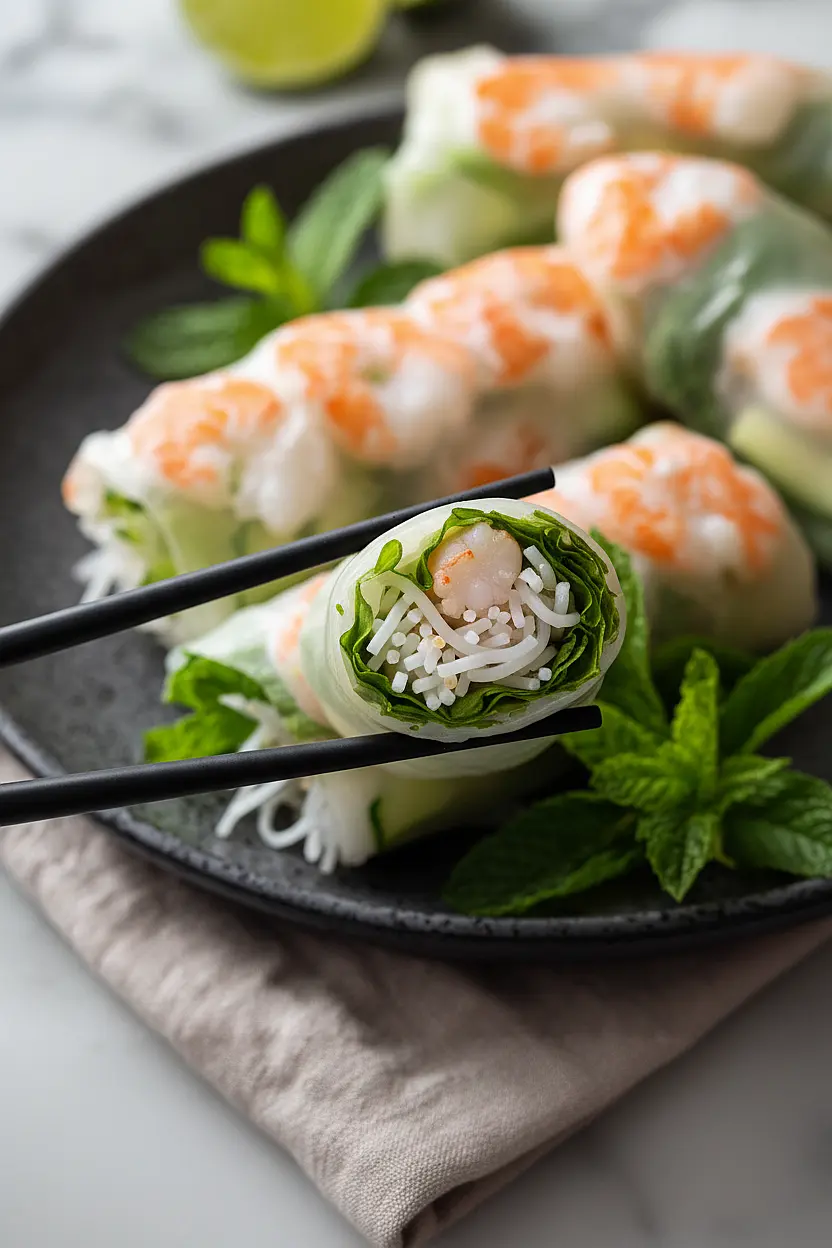
These spring rolls are pretty filling on their own, but I love serving them alongside a light Vietnamese-style salad with shredded cabbage, carrots, and a tangy lime dressing. If you want to make it a fuller meal, add some lemongrass chicken skewers or grilled pork chops on the side – the flavors work really well together. A bowl of hot and sour soup or pho makes a great starter if you’re feeding a crowd, and it keeps the Vietnamese theme going. For drinks, iced jasmine tea or fresh lime soda are refreshing options that won’t overpower the delicate flavors of the spring rolls.
Storage Instructions
Store: Spring rolls are best enjoyed fresh, but you can keep them in the fridge for up to 24 hours if needed. Wrap each roll individually in damp paper towels, then place them in an airtight container to prevent the rice paper from drying out and getting tough. The texture won’t be quite as good as fresh, but they’ll still taste great!
Prep Ahead: You can definitely prep all your ingredients ahead of time to make rolling easier. Cook the shrimp and noodles, then chop all your veggies and store everything separately in the fridge for up to 2 days. Keep the sauces in separate containers too, and they’ll last about a week in the fridge.
Serve: If your spring rolls have been in the fridge, let them sit at room temperature for about 10 minutes before eating. Don’t try to freeze these since the rice paper gets weird and mushy when thawed, so it’s better to just make what you’ll eat within a day or two.
| Preparation Time | 30-40 minutes |
| Cooking Time | 20-30 minutes |
| Total Time | 50-70 minutes |
| Level of Difficulty | Medium |
| Servings | 12 spring rolls |
Estimated Nutrition
Estimated nutrition for the whole recipe (without optional ingredients):
- Calories: 1100-1250
- Protein: 50-60 g
- Fat: 38-48 g
- Carbohydrates: 160-180 g
Ingredients
For the spring rolls:
- 1 lb shrimp (Kirkland Signature frozen tail-off shrimp recommended)
- 4 oz rice vermicelli
- 1 large carrot (julienned into thin matchsticks)
- 2 medium cucumbers (julienned)
- 1 red bell pepper (sliced into 2-inch long thin strips)
- 1/2 cup fresh mint leaves
- 1/4 cup fresh cilantro leaves
- 12 Bibb or Butter lettuce leaves
- 12 rice paper sheets (Three Ladies Brand recommended)
For the peanut sauce:
- 1/2 cup creamy peanut butter
- 1/3 cup water (plus more for thinning)
- 2 tbsp rice vinegar
- 1.5 tbsp soy sauce
- 1 tbsp hoisin sauce
- 2 tbsp maple syrup
- 1.5 tsp sesame oil
For the dipping sauce (nuoc cham):
- 1/3 cup warm water
- 3.5 tbsp sugar
- 2.5 tbsp fish sauce (Red Boat 40°N recommended)
- 1.5 tbsp fresh lime juice
- 1 Thai bird’s eye chilli (finely minced)
- 1 large garlic clove (finely minced)
Step 1: Prepare the Mise en Place
- 1 large carrot
- 2 medium cucumbers
- 1 red bell pepper
- 1/2 cup fresh mint leaves
- 1/4 cup fresh cilantro leaves
- 12 Bibb or Butter lettuce leaves
While waiting for water to boil, julienne the carrot into thin matchsticks and the cucumbers, then slice the red bell pepper into 2-inch long thin strips.
Tear the mint and cilantro leaves from their stems and set aside.
Separate the Bibb lettuce leaves gently and keep them whole.
Having all vegetables and herbs prepped and ready before you start rolling will make the assembly process smooth and efficient.
Step 2: Cook the Shrimp and Noodles
- 1 lb shrimp
- 4 oz rice vermicelli
Bring a pot of water to a boil and add the frozen shrimp, cooking for approximately 2 minutes until they turn pink and opaque.
Remove the shrimp with a slotted spoon and set aside to cool for about 5 minutes.
In the same pot of water (no need to drain), turn off the heat and add the rice vermicelli, letting them soak for 5-8 minutes until tender.
Drain the noodles and rinse thoroughly with cold water to stop the cooking process and remove excess starch.
Once the shrimp have cooled, peel away the shells and slice each shrimp in half lengthwise, creating two pieces per shrimp.
Step 3: Make the Peanut Dipping Sauce
- 1/2 cup creamy peanut butter
- 2 tbsp rice vinegar
- 1.5 tbsp soy sauce
- 1 tbsp hoisin sauce
- 2 tbsp maple syrup
- 1.5 tsp sesame oil
- 1/3 cup water
In a small bowl, whisk together the peanut butter, rice vinegar, soy sauce, hoisin sauce, maple syrup, and sesame oil until well combined and smooth.
Add the water gradually, stirring until you reach a pourable consistency—the sauce should be thick enough to coat a spoon but thin enough to drizzle.
Taste and adjust with more water if needed for your preferred consistency.
Set the sauce aside until serving.
Step 4: Prepare the Fresh Herbs and Fish Sauce Dipping Sauce
- 1/3 cup warm water
- 3.5 tbsp sugar
- 2.5 tbsp fish sauce
- 1.5 tbsp fresh lime juice
- 1 Thai bird’s eye chilli
- 1 large garlic clove
In another small bowl, combine the warm water, sugar, fish sauce, lime juice, minced Thai bird’s eye chili, and minced garlic, stirring until the sugar fully dissolves.
This creates the classic Vietnamese dipping sauce (nuoc cham) that provides a bright, spicy counterpoint to the spring rolls.
Taste and adjust the balance of sweet, salty, spicy, and sour to your preference—I like to add a touch more lime juice if the fish sauce flavor feels too strong.
Step 5: Set Up the Rolling Station
Fill a shallow bowl or plate with warm water—this will be your rice paper bath.
Wet your work surface lightly with water to prevent the rolls from sticking.
Arrange all your prepped components within arm’s reach: lettuce, cooked noodles from Step 2, julienned vegetables from Step 1, herbs from Step 1, and shrimp halves from Step 2.
Having everything organized before you start rolling will help you work quickly and maintain consistent roll quality.
Step 6: Roll the Spring Rolls
- 12 rice paper sheets
- prepared vegetables from Step 1
- cooked noodles from Step 2
- prepared shrimp from Step 2
- 12 Bibb or Butter lettuce leaves
Working one at a time, dip a rice paper sheet into the warm water for just 2-3 seconds until it becomes pliable but still slightly firm—over-soaking makes it tear.
Place it on your wet work surface.
Layer the filling in a horizontal line across the lower third of the paper: start with a lettuce leaf, then a small handful of noodles, then a few strips each of carrot, cucumber, and red pepper, a few mint leaves, and a small pinch of cilantro.
Place 3 shrimp halves (showing their pink side for visual appeal) just above the vegetable line.
I find arranging the shrimp strategically makes for a more beautiful presentation when the rolls are cut.
Fold the bottom of the paper up and over the filling, then fold in the sides tightly, and roll to the top, sealing with gentle pressure.
Place seam-side down on a plate.
Repeat with the remaining 11 rice paper sheets and filling components.
Step 7: Serve
- peanut dipping sauce from Step 3
- fish sauce dipping sauce from Step 4
Arrange the spring rolls on a serving plate, seam-side down.
Serve immediately with both dipping sauces—the peanut sauce from Step 3 and the fish sauce mixture from Step 4—placed in small bowls alongside.
If you prefer, you can cut the rolls diagonally in half to expose the beautiful layered filling before serving.
Simple Vietnamese Shrimp Spring Rolls
Ingredients
Method
- While waiting for water to boil, julienne the carrot into thin matchsticks and the cucumbers, then slice the red bell pepper into 2-inch long thin strips. Tear the mint and cilantro leaves from their stems and set aside. Separate the Bibb lettuce leaves gently and keep them whole. Having all vegetables and herbs prepped and ready before you start rolling will make the assembly process smooth and efficient.
- Bring a pot of water to a boil and add the frozen shrimp, cooking for approximately 2 minutes until they turn pink and opaque. Remove the shrimp with a slotted spoon and set aside to cool for about 5 minutes. In the same pot of water (no need to drain), turn off the heat and add the rice vermicelli, letting them soak for 5-8 minutes until tender. Drain the noodles and rinse thoroughly with cold water to stop the cooking process and remove excess starch. Once the shrimp have cooled, peel away the shells and slice each shrimp in half lengthwise, creating two pieces per shrimp.
- In a small bowl, whisk together the peanut butter, rice vinegar, soy sauce, hoisin sauce, maple syrup, and sesame oil until well combined and smooth. Add the water gradually, stirring until you reach a pourable consistency—the sauce should be thick enough to coat a spoon but thin enough to drizzle. Taste and adjust with more water if needed for your preferred consistency. Set the sauce aside until serving.
- In another small bowl, combine the warm water, sugar, fish sauce, lime juice, minced Thai bird's eye chili, and minced garlic, stirring until the sugar fully dissolves. This creates the classic Vietnamese dipping sauce (nuoc cham) that provides a bright, spicy counterpoint to the spring rolls. Taste and adjust the balance of sweet, salty, spicy, and sour to your preference—I like to add a touch more lime juice if the fish sauce flavor feels too strong.
- Fill a shallow bowl or plate with warm water—this will be your rice paper bath. Wet your work surface lightly with water to prevent the rolls from sticking. Arrange all your prepped components within arm's reach: lettuce, cooked noodles from Step 2, julienned vegetables from Step 1, herbs from Step 1, and shrimp halves from Step 2. Having everything organized before you start rolling will help you work quickly and maintain consistent roll quality.
- Working one at a time, dip a rice paper sheet into the warm water for just 2-3 seconds until it becomes pliable but still slightly firm—over-soaking makes it tear. Place it on your wet work surface. Layer the filling in a horizontal line across the lower third of the paper: start with a lettuce leaf, then a small handful of noodles, then a few strips each of carrot, cucumber, and red pepper, a few mint leaves, and a small pinch of cilantro. Place 3 shrimp halves (showing their pink side for visual appeal) just above the vegetable line. I find arranging the shrimp strategically makes for a more beautiful presentation when the rolls are cut. Fold the bottom of the paper up and over the filling, then fold in the sides tightly, and roll to the top, sealing with gentle pressure. Place seam-side down on a plate. Repeat with the remaining 11 rice paper sheets and filling components.
- Arrange the spring rolls on a serving plate, seam-side down. Serve immediately with both dipping sauces—the peanut sauce from Step 3 and the fish sauce mixture from Step 4—placed in small bowls alongside. If you prefer, you can cut the rolls diagonally in half to expose the beautiful layered filling before serving.