I didn’t taste rhubarb until I was in my twenties. Growing up, I thought it was just something that showed up in nursery rhymes and old British novels. Turns out, it’s actually a vegetable that we eat like a fruit, and it makes one of the best crumbles you’ll ever have.
The thing about rhubarb is that it’s super tart on its own—like, pucker-your-face tart. But when you mix it with sugar and top it with a buttery, oat-filled crumble, it becomes something completely different. Sweet, tangy, and just right. Plus, this recipe uses cardamom, which gives it a warm, slightly floral flavor that makes people ask, “Wait, what’s in this?”
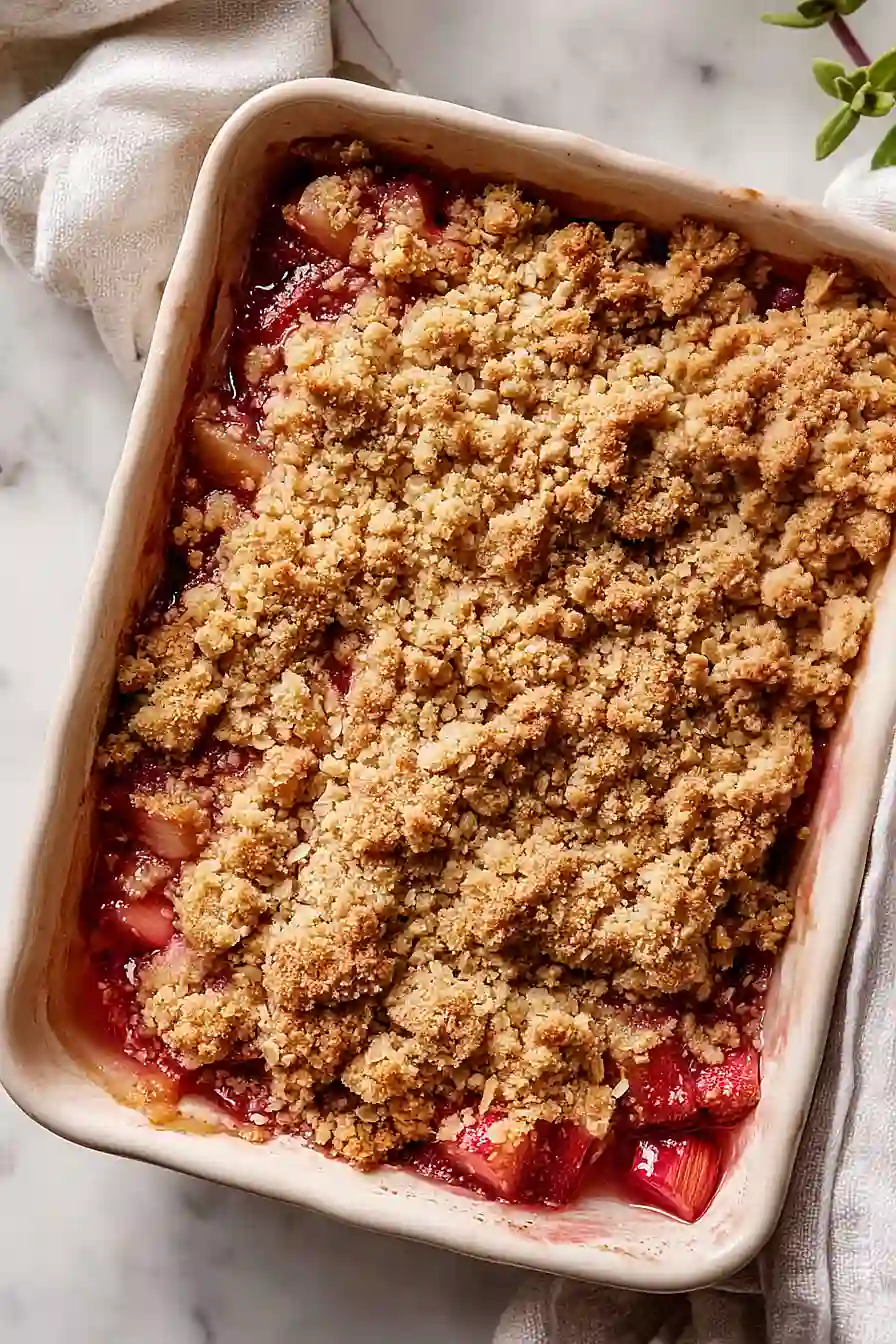
Why You’ll Love This Rhubarb Crumble
- Quick and easy dessert – This crumble comes together in under an hour, making it perfect for last-minute gatherings or when you’re craving something sweet without spending all day in the kitchen.
- Simple ingredients – You probably have most of these pantry staples on hand already, and rhubarb is easy to find at farmers markets or grocery stores in spring and summer.
- Unique flavor combination – The tart rhubarb paired with warm cardamom creates an interesting twist on traditional fruit crumbles that your guests will remember.
- Buttery, crispy topping – The brown sugar and butter crumble gets perfectly golden and crunchy on top while staying slightly soft underneath, giving you the best texture in every bite.
- Great for sharing – This recipe makes enough to serve a crowd, and it’s even better topped with vanilla ice cream or whipped cream for a classic pairing.
What Kind of Rhubarb Should I Use?
Fresh rhubarb is always your best bet for this crumble, and you’ll find it at most grocery stores during spring and early summer. The stalks can range from bright red to pale green, and here’s the thing – the color doesn’t actually affect the flavor, so don’t worry if yours looks more green than red. When picking out rhubarb, look for firm, crisp stalks and avoid any that feel soft or look dried out at the ends. If fresh rhubarb isn’t available, frozen works just fine too – just make sure to thaw it first and drain off any excess liquid before using it in your crumble.
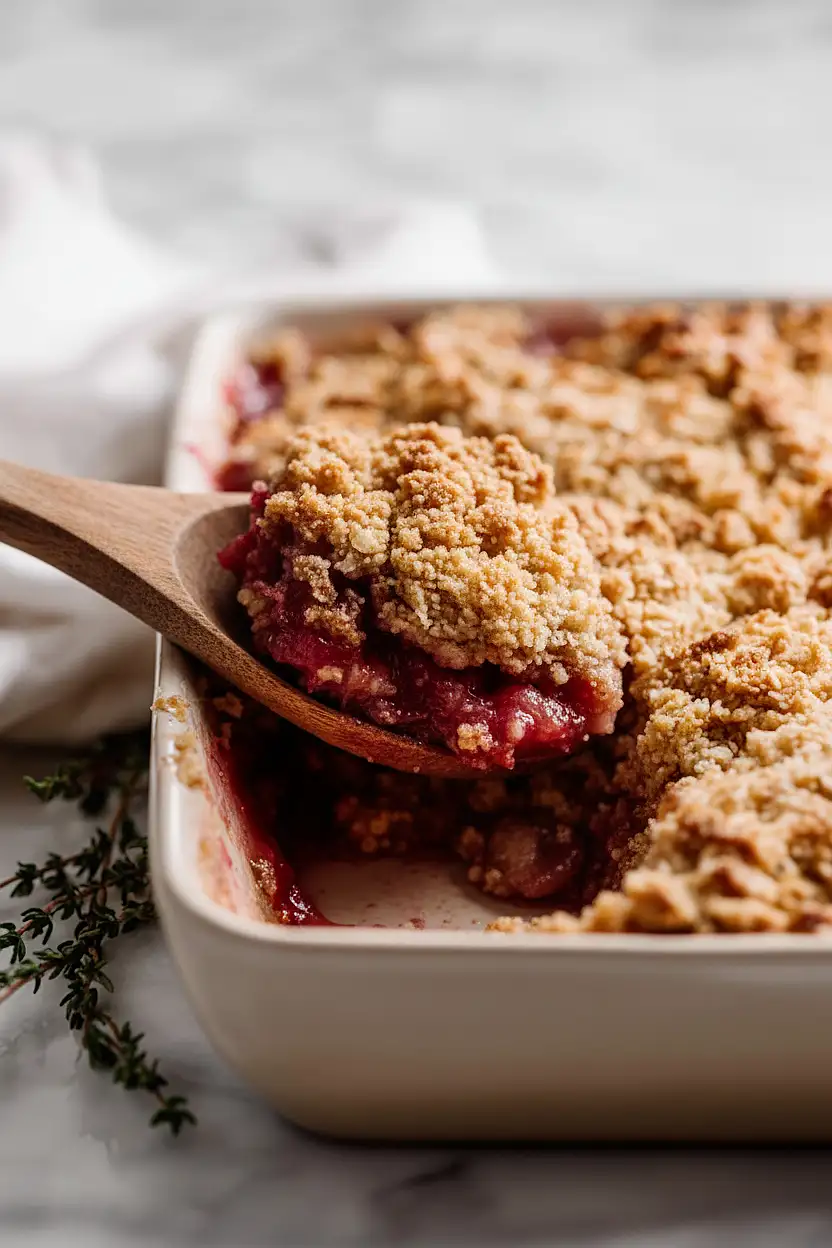
Options for Substitutions
This crumble is pretty forgiving when it comes to swapping ingredients:
- Rhubarb: You can mix rhubarb with strawberries (use 1 lb of each) for a classic combo, or try apples or peaches. Keep in mind that sweeter fruits might need less sugar, so taste as you go.
- White sugar: The amount of sugar really depends on how tart your rhubarb is. Start with 1 cup and add more if needed after tasting the mixture. You can also use coconut sugar for a deeper flavor.
- Cardamom: Don’t have cardamom? Try cinnamon, ginger, or nutmeg instead. You could also skip the spice altogether and let the rhubarb shine on its own.
- All purpose flour: For a gluten-free version, use a 1:1 gluten-free flour blend in both the filling and topping. The texture will be just as good.
- Butter: Cold coconut oil works well for a dairy-free option, though it will give a slightly different flavor. You can also use margarine if that’s what you have on hand.
- Light brown sugar: Dark brown sugar, white sugar, or even maple sugar all work fine in the topping. Each will give you a slightly different flavor profile.
Watch Out for These Mistakes While Baking
The biggest mistake with rhubarb crumble is skipping the resting time after mixing the rhubarb with sugar – let it sit for 15-20 minutes to draw out excess moisture, then drain off some of the liquid to prevent a watery filling.
Another common error is over-processing the crumble topping, which can turn it into a paste instead of those nice, chunky pieces you want – pulse just until the mixture looks like coarse crumbs with some pea-sized butter chunks still visible.
To avoid a burnt top with an undercooked filling, tent the crumble loosely with foil if the topping browns too quickly, and make sure the fruit mixture is bubbling around the edges before you take it out of the oven.
Don’t skip the 30-minute cooling period, as the filling needs this time to thicken up properly, otherwise you’ll end up with rhubarb soup when you try to scoop it out.
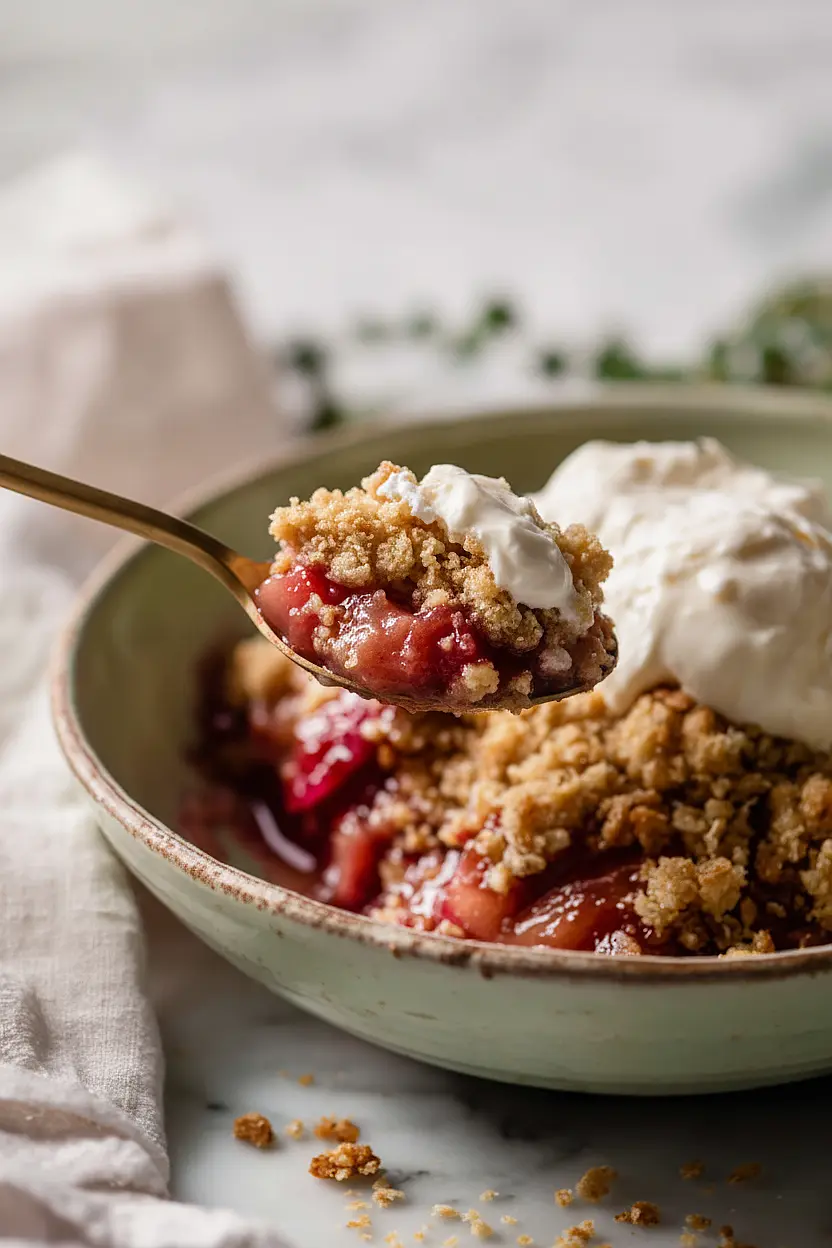
What to Serve With Rhubarb Crumble?
A big scoop of vanilla ice cream is my go-to topping for rhubarb crumble – the cold, creamy ice cream melting into the warm, tart filling is absolutely perfect. If you’re not an ice cream person, a dollop of freshly whipped cream or even some Greek yogurt works beautifully and balances out the sweetness. I also love serving this for brunch alongside coffee or tea, especially when you have guests over on a weekend morning. For a really indulgent dessert, try drizzling some caramel sauce over the top or serving it with a side of custard if you want to go the traditional British route.
Storage Instructions
Store: Keep your rhubarb crumble covered with foil or plastic wrap in the fridge for up to 4 days. It actually tastes great cold straight from the fridge, or you can warm it up whenever you’re ready for another serving.
Freeze: This crumble freezes really well for up to 3 months. Let it cool completely, then wrap it tightly in plastic wrap and foil before freezing. You can freeze the whole thing or cut it into individual portions first.
Reheat: Warm it up in a 350°F oven for about 15-20 minutes until heated through and the topping gets crispy again. If you’re reheating from frozen, add an extra 10-15 minutes and cover with foil for the first half of reheating.
| Preparation Time | 10-15 minutes |
| Cooking Time | 35-45 minutes |
| Total Time | 45-60 minutes |
| Level of Difficulty | Easy |
| Servings | 8 servings |
Estimated Nutrition
Estimated nutrition for the whole recipe (without optional ingredients):
- Calories: 2250-2400
- Protein: 12-16 g
- Fat: 65-75 g
- Carbohydrates: 425-450 g
Ingredients
For the filling:
- 2.25 lb rhubarb (trimmed and cut into 1-inch pieces)
- 1 cup sugar (Domino granulated sugar)
- 1/4 cup flour
- 1 tablespoon cornstarch
- 1 tsp vanilla
- 1/4 tsp cardamom (freshly ground for better aroma)
For the topping:
- 1 cup flour (King Arthur all-purpose flour)
- 1/2 cup old-fashioned rolled oats
- 1/2 tsp salt
- 3/4 cup brown sugar
- 1/2 cup plus 1 tablespoon butter (cold and cut into 1/2-inch cubes)
Step 1: Prepare the Rhubarb Filling
- 2.25 lb rhubarb, trimmed and cut into 1-inch pieces
- 1 cup sugar
- 1/4 cup flour
- 1 tablespoon cornstarch
- 1 tsp vanilla
- 1/4 tsp cardamom, freshly ground
Trim the rhubarb and cut into 1-inch pieces, then place in a large bowl.
Add the granulated sugar, 1/4 cup flour, cornstarch, vanilla, and freshly ground cardamom.
Gently toss everything together until the rhubarb is evenly coated with the sugar mixture.
The cornstarch and flour will help absorb the rhubarb’s juices as it cooks, preventing a soupy filling.
Let this sit while you prepare the crumble topping.
Step 2: Make the Crumble Topping
- 1 cup flour
- 1/2 tsp salt
- 3/4 cup brown sugar
- 1/2 cup plus 1 tablespoon butter, cold and cut into 1/2-inch cubes
- 1/2 cup old-fashioned rolled oats
Add the 1 cup all-purpose flour, salt, brown sugar, and cold butter cubes to a food processor.
Pulse until the mixture resembles coarse breadcrumbs with some pea-sized pieces of butter still visible—this ensures a tender, crumbly texture rather than a dense topping.
Stir in the rolled oats by hand after pulsing to keep them from breaking down too much.
I like to use really cold butter straight from the fridge and cut it into small cubes; it creates those beautiful irregular crumbles that bake up perfectly crispy.
Step 3: Assemble and Bake
- rhubarb filling mixture from Step 1
- crumble topping from Step 2
Spread the rhubarb filling from Step 1 evenly into a 9×13-inch baking dish or similar size.
Distribute the crumble topping from Step 2 over the rhubarb, breaking up any large clumps with your fingers so it covers the filling in an even but rustic layer.
Bake at 375°F for 35-45 minutes, until the topping is golden brown and the rhubarb filling bubbles around the edges.
The crumble is done when you see juices starting to emerge at the sides—this indicates the rhubarb has softened and released its juices.
Step 4: Cool and Serve
Remove the crumble from the oven and let it cool for at least 30 minutes at room temperature.
This resting time allows the filling to set slightly so it won’t be runny when you serve it.
I find that serving it slightly warm (not piping hot) with cold vanilla ice cream or whipped cream gives you the best contrast of temperatures and textures.
Quick Rhubarb Crumble
Ingredients
Method
- Trim the rhubarb and cut into 1-inch pieces, then place in a large bowl. Add the granulated sugar, 1/4 cup flour, cornstarch, vanilla, and freshly ground cardamom. Gently toss everything together until the rhubarb is evenly coated with the sugar mixture. The cornstarch and flour will help absorb the rhubarb's juices as it cooks, preventing a soupy filling. Let this sit while you prepare the crumble topping.
- Add the 1 cup all-purpose flour, salt, brown sugar, and cold butter cubes to a food processor. Pulse until the mixture resembles coarse breadcrumbs with some pea-sized pieces of butter still visible—this ensures a tender, crumbly texture rather than a dense topping. Stir in the rolled oats by hand after pulsing to keep them from breaking down too much. I like to use really cold butter straight from the fridge and cut it into small cubes; it creates those beautiful irregular crumbles that bake up perfectly crispy.
- Spread the rhubarb filling from Step 1 evenly into a 9x13-inch baking dish or similar size. Distribute the crumble topping from Step 2 over the rhubarb, breaking up any large clumps with your fingers so it covers the filling in an even but rustic layer. Bake at 375°F for 35-45 minutes, until the topping is golden brown and the rhubarb filling bubbles around the edges. The crumble is done when you see juices starting to emerge at the sides—this indicates the rhubarb has softened and released its juices.
- Remove the crumble from the oven and let it cool for at least 30 minutes at room temperature. This resting time allows the filling to set slightly so it won't be runny when you serve it. I find that serving it slightly warm (not piping hot) with cold vanilla ice cream or whipped cream gives you the best contrast of temperatures and textures.