There’s something about soup season that gets me every time. When the air turns crisp and the leaves start falling, I find myself craving a bowl of something warm and cozy. And butternut squash soup? It’s been on repeat in my kitchen for years.
I used to think making soup from scratch was too much work. All that peeling and chopping felt like a lot. But then I discovered that roasting the squash first changes everything. You just cut it in half, toss it in the oven, and let it do its thing. The flavors get sweet and deep, and honestly, most of the work happens while you’re doing something else.
This vegan version is one I make all the time now. It’s creamy without any dairy, filling enough for dinner, and it tastes like fall in a bowl. Plus, it makes great leftovers for lunch the next day.
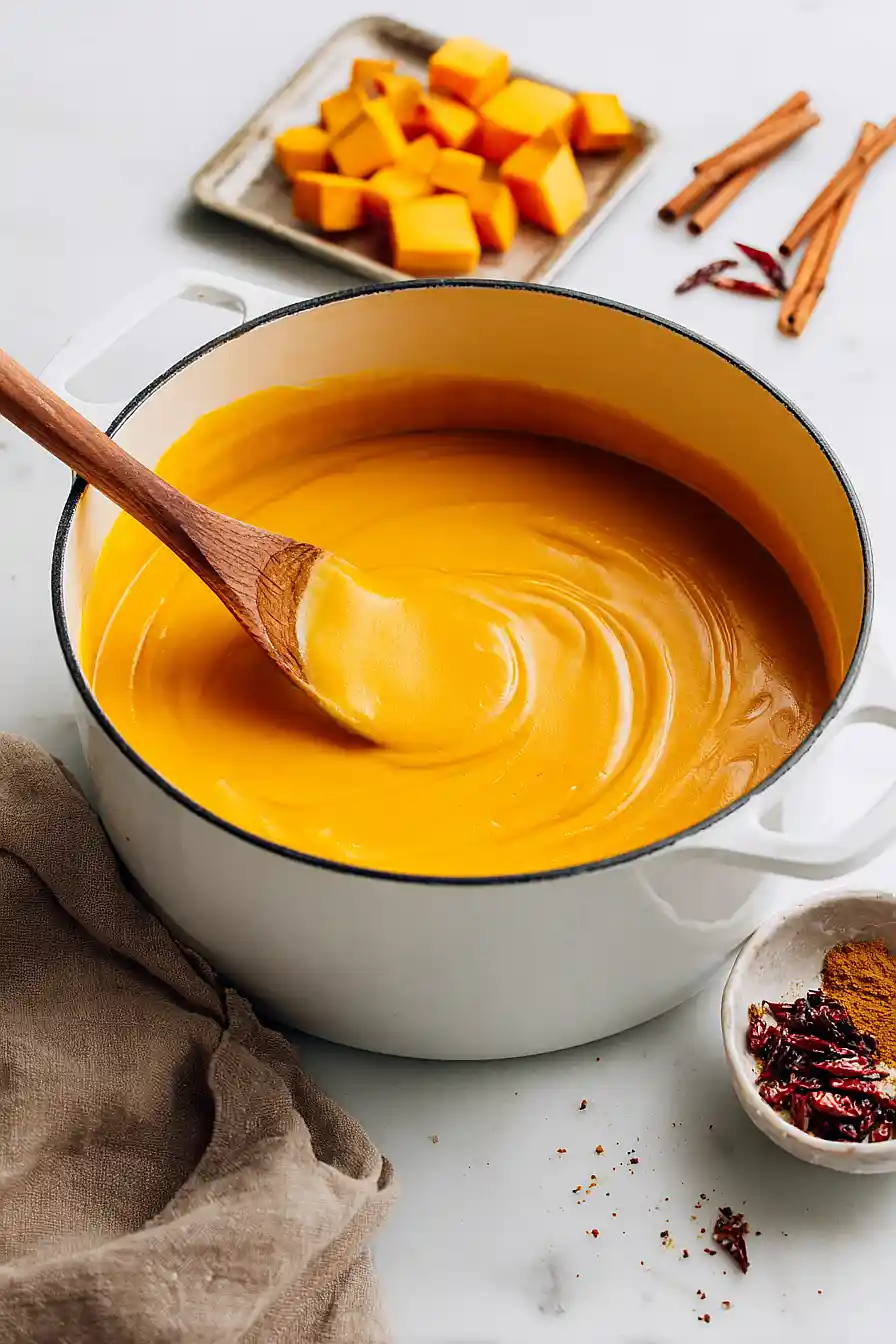
Why You’ll Love This Butternut Squash Soup
- Naturally vegan and healthy – This soup is packed with vegetables and uses coconut milk for creaminess without any dairy, making it perfect for plant-based eaters or anyone looking for a lighter option.
- Simple ingredients – You probably already have most of these pantry staples on hand, and the fresh produce is easy to find at any grocery store.
- Cozy fall flavors – The roasted butternut squash combined with warm spices like cinnamon and nutmeg creates that comforting taste you crave when the weather gets cooler.
- Ready in under an hour – From chopping to blending, this soup comes together in about 45-60 minutes, making it doable for a weeknight dinner.
- Meal prep friendly – This soup stores well in the fridge for several days and tastes even better the next day, so you can make a big batch for easy lunches throughout the week.
What Kind of Butternut Squash Should I Use?
For this soup, you’ll want to grab a small to medium butternut squash from the produce section – look for one that feels heavy for its size and has a matte, tan skin without any soft spots or bruises. If you’re short on time or just want to make things easier, pre-cut butternut squash cubes from the refrigerated produce section work perfectly fine and will save you about 15 minutes of prep work. Fresh squash will generally have a slightly sweeter, more pronounced flavor than pre-cut, but honestly, the difference is pretty minimal once everything is roasted and blended together. One small butternut squash typically yields about 5 cups of cubed squash, so keep that in mind when you’re shopping.

Options for Substitutions
This soup is pretty forgiving, so feel free to make a few swaps based on what you have:
- Butternut squash: You can use other winter squashes like acorn, kabocha, or even sweet potatoes. They’ll give you a similar creamy texture, though the flavor will be slightly different. Keep the roasting time the same.
- Avocado oil: Any neutral oil works here – try grapeseed, vegetable, or olive oil. If you’re going oil-free, brush the vegetables with a mix of maple syrup and a splash of vegetable broth before roasting.
- Coconut milk: Cashew cream, oat milk, or almond milk are good alternatives. For extra creaminess, soak 1/2 cup raw cashews in hot water for 15 minutes, then blend with 1/2 cup water.
- Maple syrup: Agave nectar or a touch of brown sugar will work just fine for that hint of sweetness.
- Vegetable broth: Water works in a pinch, though you’ll want to add a bit more salt to make up for the lost flavor. You could also use mushroom broth for extra depth.
- Carrots: If you’re short on carrots, you can add more butternut squash or throw in some parsnips for a slightly earthier flavor.
Watch Out for These Mistakes While Cooking
The biggest mistake when roasting vegetables for soup is overcrowding the pan, which causes them to steam instead of caramelize – spread your butternut squash, carrots, onion, and garlic in a single layer on a large baking sheet to get that sweet, roasted flavor.
Skipping the roasting step altogether and just boiling the vegetables will give you a flat, one-dimensional soup, so don’t be tempted to take shortcuts even if you’re short on time.
When blending hot soup, always start on low speed and gradually increase to avoid a dangerous eruption, or better yet, let it cool for a few minutes first and blend in batches if needed.
Finally, add the vegetable broth gradually rather than all at once – you can always thin out a thick soup, but it’s harder to fix one that’s too watery, so start with 1 ½ cups and add more until you reach your preferred consistency.

What to Serve With Butternut Squash Soup?
This soup is naturally sweet and creamy, so I love pairing it with something a bit savory and crunchy to balance things out. A warm slice of crusty bread or some garlic toast is perfect for dipping, and if you want to make it more filling, try serving it alongside a simple arugula salad with dried cranberries and walnuts. For a cozy fall meal, I’ll sometimes add a grain bowl on the side with quinoa, roasted chickpeas, and whatever veggies I have on hand. You can also top the soup itself with those toasted pumpkin seeds and croutons mentioned in the recipe for extra texture in every spoonful.
Storage Instructions
Store: This soup actually tastes even better the next day after all the flavors have had time to mingle. Keep it in an airtight container in the fridge for up to 5 days. Just give it a good stir before reheating since it might thicken up a bit as it sits.
Freeze: Butternut squash soup is one of those recipes that freezes like a dream. Let it cool completely, then pour it into freezer-safe containers or bags, leaving about an inch of space at the top for expansion. It’ll keep for up to 3 months, which is perfect for having a cozy meal ready to go.
Reheat: Warm it up gently on the stovetop over medium-low heat, stirring occasionally. If it’s gotten too thick, just add a splash of vegetable broth or coconut milk to thin it out. You can also microwave individual portions, but I like to add the croutons and pumpkin seeds fresh right before serving so they stay crunchy.
| Preparation Time | 15-20 minutes |
| Cooking Time | 30-40 minutes |
| Total Time | 45-60 minutes |
| Level of Difficulty | Easy |
Estimated Nutrition
Estimated nutrition for the whole recipe (without optional ingredients):
- Calories: 320-380
- Protein: 4-6 g
- Fat: 8-11 g
- Carbohydrates: 60-70 g
Ingredients
For the soup:
- 5 cups butternut squash, peeled and diced (from about 1 small squash)
- 2 cups carrots, peeled and sliced into 1-inch pieces
- 1/2 medium white or yellow onion, sliced (about 1 cup)
- 5 whole garlic cloves, peeled (can be gently smashed)
- 2 tsp avocado oil (or substitute maple syrup or extra vegetable broth for oil-free)
- 2 tsp maple syrup
- Sea salt and black pepper, to taste
- 1 1/2 to 2 cups vegetable broth
- 2/3 cup light coconut milk, plus extra for garnish if desired (or use cashew milk)
- 1/4 tsp ground cinnamon
- A pinch nutmeg (optional)
- A pinch cayenne pepper (optional)
For serving:
- Toasted croutons
- Toasted pepitas (pumpkin seeds)
Step 1: Roast the Vegetables
- 5 cups butternut squash, peeled and diced (from about 1 small squash)
- 2 cups carrots, peeled and sliced into 1-inch pieces
- 1/2 medium white or yellow onion, sliced (about 1 cup)
- 5 whole garlic cloves, peeled (can be gently smashed)
- 2 tsp avocado oil (or substitute maple syrup or extra vegetable broth for oil-free)
- 2 tsp maple syrup
- sea salt and black pepper, to taste
Preheat your oven to 400°F (204°C) and line two baking sheets with parchment paper.
Arrange the diced butternut squash, sliced carrots, onion, and garlic cloves on the baking sheets.
Drizzle with avocado oil and maple syrup, then season generously with sea salt and black pepper.
Toss everything to ensure the vegetables are evenly coated.
Roast in the oven for 25-30 minutes, or until the squash and carrots are fork-tender.
Roasting brings out a sweeter, richer flavor in the vegetables—I find that maple syrup adds a wonderful caramelized note.
Step 2: Simmer with Broth and Spices
- roasted vegetables (from Step 1)
- 1 1/2 to 2 cups vegetable broth
- 2/3 cup light coconut milk, plus extra for garnish if desired (or use cashew milk)
- 1/4 tsp ground cinnamon
- a pinch nutmeg (optional)
- a pinch cayenne pepper (optional)
Transfer the roasted vegetables from Step 1 to a large pot or Dutch oven.
Add vegetable broth (starting with 1 1/2 cups and adding more later if needed), light coconut milk, ground cinnamon, and if desired, a pinch each of nutmeg and cayenne pepper.
Stir everything well to combine and bring to a gentle simmer over medium heat.
Once simmering, reduce the heat to low, cover the pot, and let everything cook for 5-10 minutes to allow the flavors to meld together.
Step 3: Blend the Soup
- simmered soup mixture (from Step 2)
Use an immersion blender directly in the pot, or carefully transfer the soup mixture to a high-speed blender that’s safe for hot ingredients.
Blend until the soup is completely creamy and smooth.
If you prefer a thinner consistency, you can add additional vegetable broth at this point.
I always recommend blending in batches if using a countertop blender for safety.
Step 4: Season and Finish
- sea salt and black pepper, to taste
- maple syrup (from Step 1, add more if needed)
- ground cinnamon (from Step 2, add more if needed)
- nutmeg (optional, from Step 2, add more if needed)
- cayenne pepper (optional, from Step 2, add more if needed)
Taste the blended soup and adjust the seasoning as needed.
Add more salt and black pepper for seasoning, a bit more maple syrup for extra sweetness, or more cinnamon, nutmeg, or cayenne pepper to suit your taste.
I find a final seasoning tweak really brings out the bright, warming flavors of the soup.
Step 5: Serve with Toppings
- toasted croutons
- toasted pepitas (pumpkin seeds)
- extra coconut milk for garnish (optional)
Ladle the hot soup into bowls.
Garnish each bowl with a drizzle of extra coconut milk if desired, and top with toasted pepitas (pumpkin seeds) or croutons for added texture and flavor.
For a creamy finish, I like to swirl in a bit more coconut milk right before serving.
Enjoy your soup hot, and store any leftovers covered in the fridge for up to 4-5 days or freeze for up to 1 month.
Irresistible Vegan Roasted Butternut Squash Soup
Ingredients
Method
- Preheat your oven to 400°F (204°C) and line two baking sheets with parchment paper. Arrange the diced butternut squash, sliced carrots, onion, and garlic cloves on the baking sheets. Drizzle with avocado oil and maple syrup, then season generously with sea salt and black pepper. Toss everything to ensure the vegetables are evenly coated. Roast in the oven for 25-30 minutes, or until the squash and carrots are fork-tender. Roasting brings out a sweeter, richer flavor in the vegetables—I find that maple syrup adds a wonderful caramelized note.
- Transfer the roasted vegetables from Step 1 to a large pot or Dutch oven. Add vegetable broth (starting with 1 1/2 cups and adding more later if needed), light coconut milk, ground cinnamon, and if desired, a pinch each of nutmeg and cayenne pepper. Stir everything well to combine and bring to a gentle simmer over medium heat. Once simmering, reduce the heat to low, cover the pot, and let everything cook for 5-10 minutes to allow the flavors to meld together.
- Use an immersion blender directly in the pot, or carefully transfer the soup mixture to a high-speed blender that’s safe for hot ingredients. Blend until the soup is completely creamy and smooth. If you prefer a thinner consistency, you can add additional vegetable broth at this point. I always recommend blending in batches if using a countertop blender for safety.
- Taste the blended soup and adjust the seasoning as needed. Add more salt and black pepper for seasoning, a bit more maple syrup for extra sweetness, or more cinnamon, nutmeg, or cayenne pepper to suit your taste. I find a final seasoning tweak really brings out the bright, warming flavors of the soup.
- Ladle the hot soup into bowls. Garnish each bowl with a drizzle of extra coconut milk if desired, and top with toasted pepitas (pumpkin seeds) or croutons for added texture and flavor. For a creamy finish, I like to swirl in a bit more coconut milk right before serving. Enjoy your soup hot, and store any leftovers covered in the fridge for up to 4-5 days or freeze for up to 1 month.