If you ask me, figs are one of fall’s best-kept secrets.
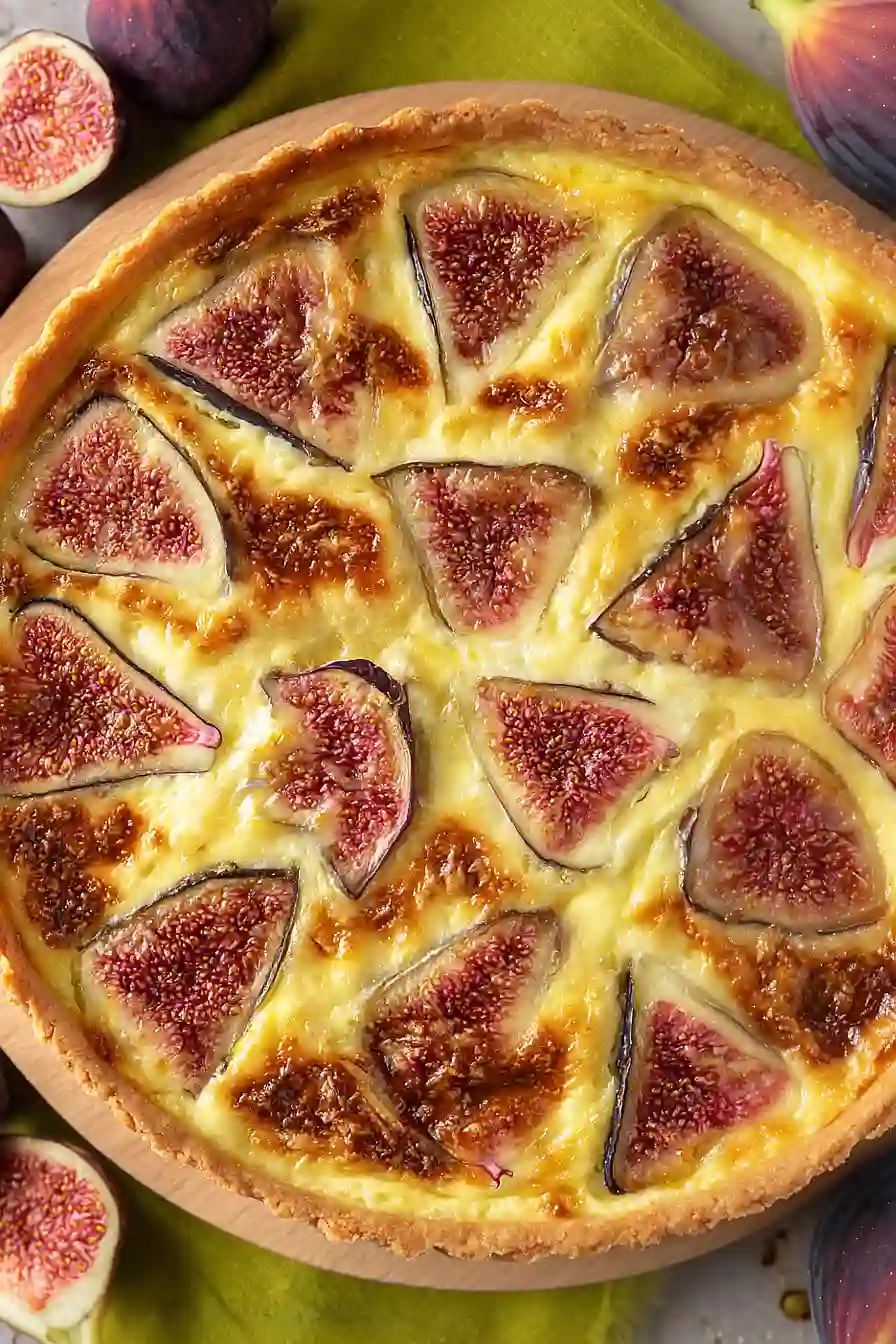
This savory quiche brings together sweet fresh figs and salty bacon in a way that just works. Creamy goat cheese and caramelized onions add richness, while fresh thyme and a hint of nutmeg round out the flavors.
It’s all baked in a flaky pie crust with a simple egg and milk custard. The figs soften as they bake, their natural sweetness balancing the smoky bacon perfectly.
It’s a brunch-worthy dish that feels fancy but comes together without much fuss, perfect for a lazy weekend morning.
Why You’ll Love This Fig Quiche
- Sweet and savory combination – The fresh figs paired with smoky bacon and tangy goat cheese create a flavor balance that’s hard to resist.
- Perfect for any meal – This quiche works just as well for brunch, lunch, or a light dinner, making it a go-to recipe you’ll make again and again.
- Simple ingredients – With just a handful of basic ingredients, you can create something that looks and tastes impressive without much fuss.
- Ready in about an hour – From start to finish, you’ll have this quiche on the table in just over an hour, making it doable even on busy days.
What Kind of Figs Should I Use?
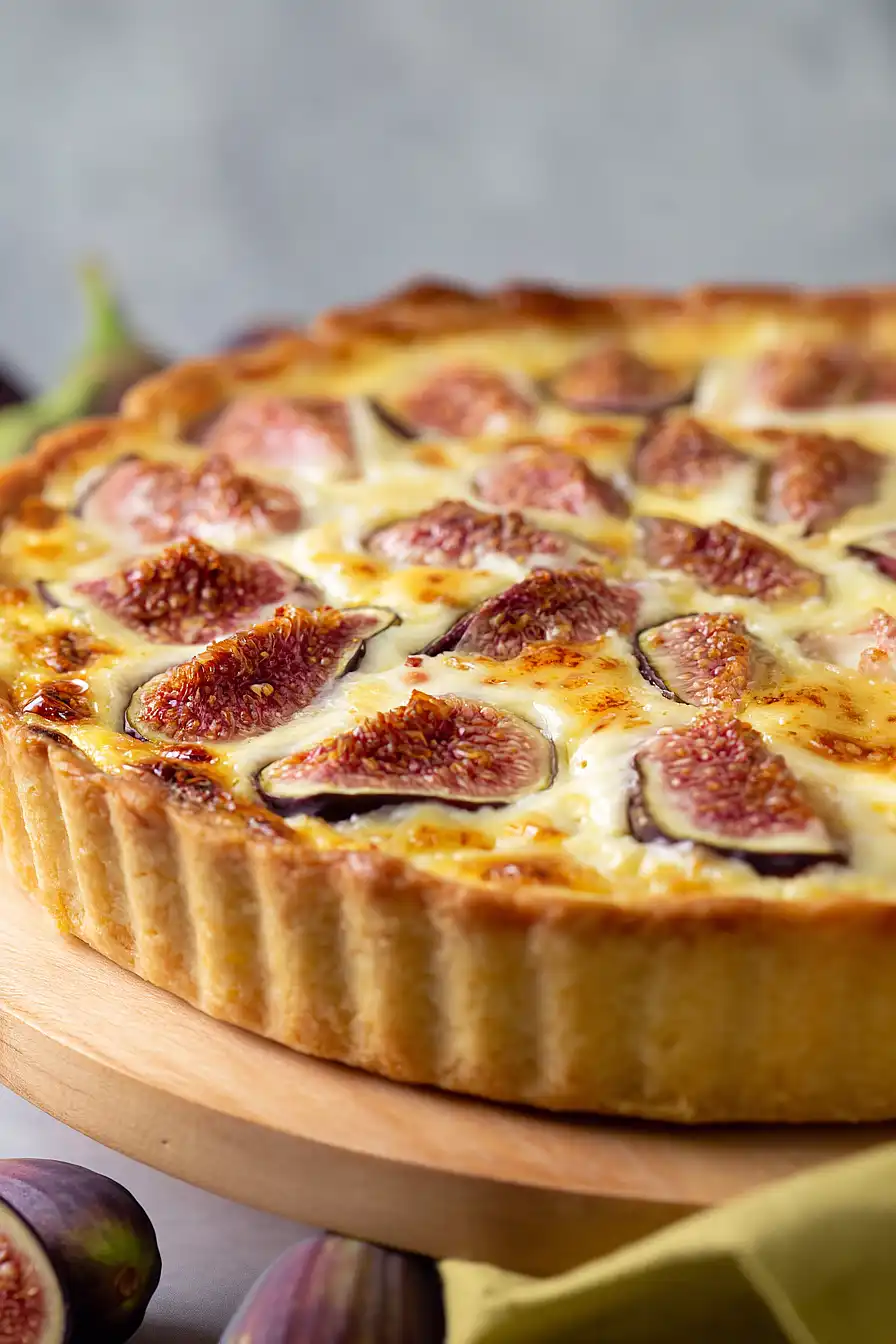
Fresh figs are ideal for this quiche, and you’ll find a few different varieties at the store depending on the season. Black Mission figs and Brown Turkey figs are the most common types you’ll come across, and either one works great here. If fresh figs aren’t available, you can use dried figs in a pinch – just soak them in warm water for about 10 minutes to soften them up before slicing. When picking fresh figs, look for ones that are slightly soft to the touch but not mushy, and avoid any with splits or an overly sour smell.
Options for Substitutions
This quiche is pretty forgiving when it comes to swapping ingredients:
- Shortcrust pastry: You can use store-bought pie crust or puff pastry if you’re short on time. A homemade shortcrust is nice, but the pre-made versions work just fine and save you some effort.
- Goat cheese: Not a fan of goat cheese? Try crumbled feta, blue cheese, or even cream cheese for a milder flavor. Ricotta works too if you want something less tangy.
- Figs: Fresh figs can be swapped with dried figs (just soak them in warm water for 10 minutes first), or try pears or apples for a different sweet note that still pairs well with the savory ingredients.
- Smoked bacon: Regular bacon works perfectly fine, or you can use pancetta or prosciutto. For a vegetarian version, just leave it out and add some sautéed mushrooms instead.
- Milk: Heavy cream makes the quiche richer, while half-and-half splits the difference. You can also use non-dairy milk like oat or almond milk if needed.
Watch Out for These Mistakes While Baking
The biggest mistake when making quiche is skipping the blind baking step for your pastry base, which leads to a soggy bottom crust that can ruin an otherwise perfect dish – make sure to use pie weights or dried beans to keep the crust flat while it pre-bakes.
Another common error is adding the bacon and onion mixture while it’s still hot, as this can start cooking the eggs prematurely and create an uneven texture, so let your filling cool for a few minutes before assembling.
To avoid a watery quiche, drain any excess fat from the cooked bacon and onion on paper towels, and don’t overbake – the center should still have a slight jiggle when you remove it from the oven since it will continue to set as it cools.
For the best results, let your quiche rest for at least 10 minutes before slicing, which helps everything firm up and makes for cleaner cuts.
What to Serve With Fig Quiche?
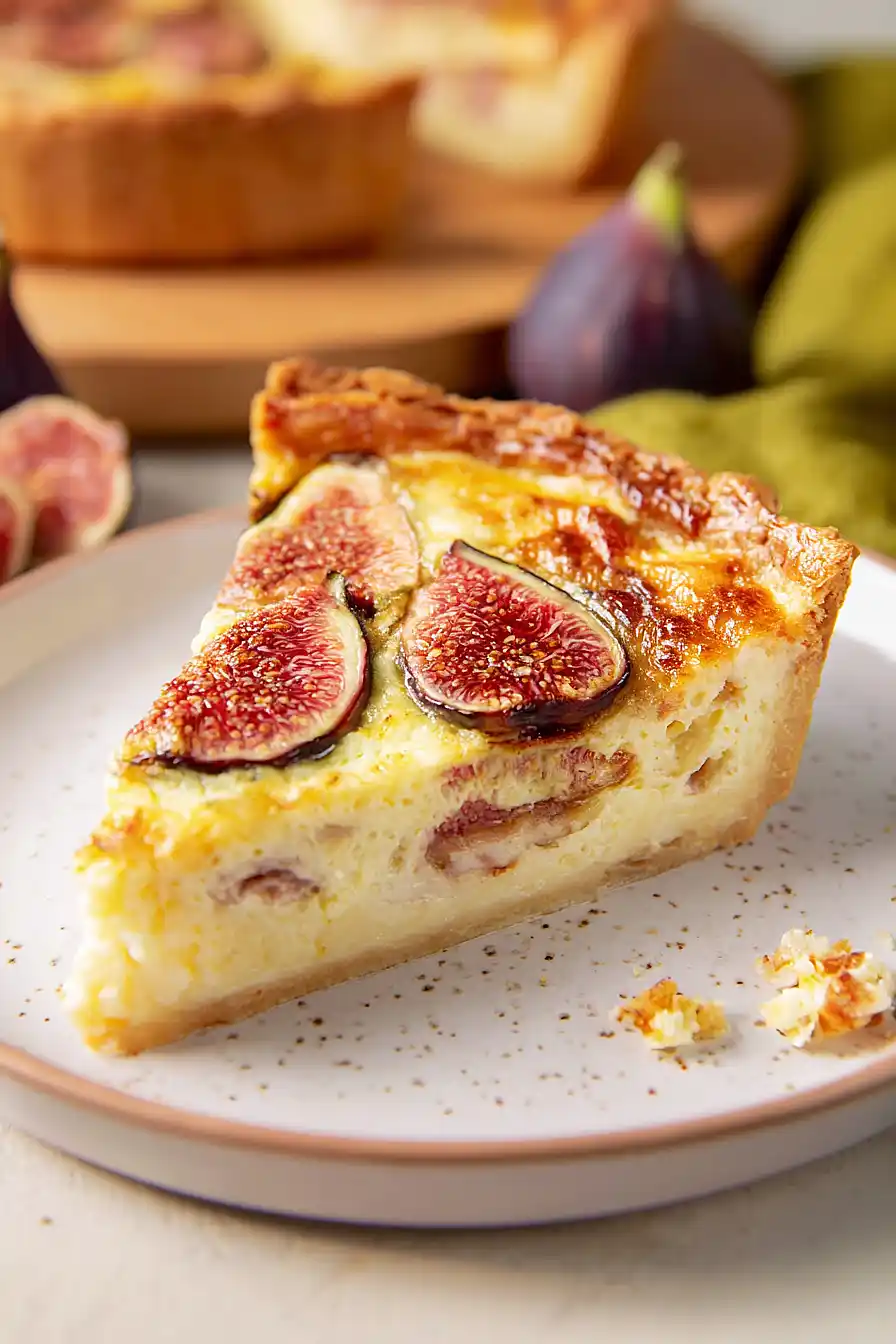
This fig quiche is perfect for brunch or a light dinner, and I love serving it with a simple arugula salad dressed with olive oil and lemon juice. The peppery greens balance out the sweetness of the figs and the richness of the goat cheese really nicely. You could also serve it alongside some roasted potatoes or a fruit salad if you’re doing a brunch spread. Since quiche is pretty filling on its own, I usually keep the sides light and fresh so everything doesn’t feel too heavy.
Storage Instructions
Store: Keep your fig quiche covered in the fridge for up to 3 days. I like to cover it with plastic wrap or aluminum foil, or just keep it in an airtight container. It actually tastes great cold straight from the fridge, which makes it perfect for quick lunches throughout the week.
Freeze: This quiche freezes really well for up to 2 months. Let it cool completely first, then wrap it tightly in plastic wrap and a layer of foil. You can freeze the whole thing or cut it into slices and freeze individually for easy grab-and-go portions.
Reheat: Warm up slices in the oven at 350°F for about 15 minutes, or in the microwave for 1-2 minutes. If you’re reheating from frozen, let it thaw in the fridge overnight first, or add a few extra minutes to the oven time.
| Preparation Time | 20-30 minutes |
| Cooking Time | 35-45 minutes |
| Total Time | 55-75 minutes |
| Level of Difficulty | Medium |
| Servings | 6 slices |
Estimated Nutrition
Estimated nutrition for the whole recipe (without optional ingredients):
- Calories: 1100-1250
- Protein: 43-50 g
- Fat: 65-75 g
- Carbohydrates: 75-90 g
Ingredients
For the base:
- 1 9-inch refrigerated pie crust (such as Pillsbury)
For the filling:
- 3 large eggs
- 2/3 cup whole milk
- 3 oz goat cheese, crumbled
- 4 fresh figs, sliced into 1/4-inch rounds
- 1/2 medium yellow onion, finely diced
- 6 oz thick-cut bacon, diced
- 1/4 teaspoon ground nutmeg
- 1 tablespoon fresh thyme leaves
Step 1: Prepare the Pie Crust
- 1 9-inch refrigerated pie crust
Preheat your oven to 350°F.
Remove the refrigerated pie crust from its packaging and place it in a 9-inch pie dish, gently pressing it into the bottom and sides.
Prick the bottom with a fork to prevent excessive bubbling.
Bake for 10 minutes with pie weights (or dried beans) to prevent puffing, then remove the weights and bake for an additional 5 minutes until lightly set but not browned.
This partial baking prevents a soggy bottom crust, which is crucial for quiche.
Step 2: Cook the Bacon and Onions
- 6 oz thick-cut bacon, diced
- 1/2 medium yellow onion, finely diced
While the crust is baking, dice the bacon into small pieces and cook them in a large skillet over medium heat until crispy, about 5-7 minutes.
Remove the bacon with a slotted spoon and set aside on paper towels.
In the same pan with the bacon fat, add the finely diced onion and sauté for about 3 minutes until softened and lightly golden.
I find the bacon fat adds incredible savory depth to the onions—don’t skip it.
Step 3: Prepare the Custard Filling
- 3 large eggs
- 2/3 cup whole milk
- 3 oz goat cheese, crumbled
- 1/4 teaspoon ground nutmeg
In a medium bowl, whisk together the eggs and whole milk until well combined and slightly frothy.
Add the crumbled goat cheese and ground nutmeg, whisking until the cheese is mostly incorporated (some small lumps are fine—they’ll add lovely texture).
This custard base will set during baking and hold all your flavorful ingredients together.
Step 4: Assemble and Bake the Quiche
- cooked bacon and onions from Step 2
- custard mixture from Step 3
- 4 fresh figs, sliced into 1/4-inch rounds
- 1 tablespoon fresh thyme leaves
Spread the cooked bacon and onions from Step 2 evenly across the bottom of the partially baked crust from Step 1.
Pour the custard mixture from Step 3 over the bacon and onions, leaving about 1/4 inch of space at the top.
I like to arrange the fresh fig slices on top in a circular pattern just before baking—it looks elegant and ensures even distribution.
Sprinkle the fresh thyme leaves over the top.
Bake at 350°F for 25-30 minutes until the custard is set but still slightly jiggly in the very center (it will continue to set as it cools).
The quiche is done when a knife inserted near the edge comes out clean.
Step 5: Cool and Serve
Remove the quiche from the oven and let it rest at room temperature for 10 minutes.
This resting period allows the custard to fully set and makes slicing much cleaner.
Cut into wedges and serve warm or at room temperature.
Creamy Fig Quiche
Ingredients
Method
- Preheat your oven to 350°F. Remove the refrigerated pie crust from its packaging and place it in a 9-inch pie dish, gently pressing it into the bottom and sides. Prick the bottom with a fork to prevent excessive bubbling. Bake for 10 minutes with pie weights (or dried beans) to prevent puffing, then remove the weights and bake for an additional 5 minutes until lightly set but not browned. This partial baking prevents a soggy bottom crust, which is crucial for quiche.
- While the crust is baking, dice the bacon into small pieces and cook them in a large skillet over medium heat until crispy, about 5-7 minutes. Remove the bacon with a slotted spoon and set aside on paper towels. In the same pan with the bacon fat, add the finely diced onion and sauté for about 3 minutes until softened and lightly golden. I find the bacon fat adds incredible savory depth to the onions—don't skip it.
- In a medium bowl, whisk together the eggs and whole milk until well combined and slightly frothy. Add the crumbled goat cheese and ground nutmeg, whisking until the cheese is mostly incorporated (some small lumps are fine—they'll add lovely texture). This custard base will set during baking and hold all your flavorful ingredients together.
- Spread the cooked bacon and onions from Step 2 evenly across the bottom of the partially baked crust from Step 1. Pour the custard mixture from Step 3 over the bacon and onions, leaving about 1/4 inch of space at the top. I like to arrange the fresh fig slices on top in a circular pattern just before baking—it looks elegant and ensures even distribution. Sprinkle the fresh thyme leaves over the top. Bake at 350°F for 25-30 minutes until the custard is set but still slightly jiggly in the very center (it will continue to set as it cools). The quiche is done when a knife inserted near the edge comes out clean.
- Remove the quiche from the oven and let it rest at room temperature for 10 minutes. This resting period allows the custard to fully set and makes slicing much cleaner. Cut into wedges and serve warm or at room temperature.