Pasta night is always a win in my house, but sometimes I want something that feels a bit more special than the usual marinara. That’s when I turn to salmon pasta. It’s creamy, lemony, and rich without being heavy. Plus, it comes together in about thirty minutes, which means I can get dinner on the table before anyone starts raiding the snack drawer.
The key to this dish is building flavor without overthinking it. You sear the salmon until it’s golden, cook your pasta, and toss everything together with butter, garlic, and crème fraîche. The pasta water helps bring it all together into a silky sauce that coats every bite.
This recipe feels fancy enough for date night but easy enough for a regular Tuesday. And if you’ve got picky eaters, the capers and dill are optional. I always include them because they add a nice brightness, but you do you.

Why You’ll Love This Salmon Pasta
- Restaurant-quality meal at home – The creamy, garlicky sauce with flaky salmon tastes like something you’d order at a fancy Italian restaurant, but you can make it in your own kitchen.
- Ready in under an hour – From start to finish, this dish comes together in about 40-55 minutes, making it perfect for busy weeknights when you want something special without spending hours cooking.
- Simple ingredients – You probably have most of these staples in your pantry already, and the salmon fillet is the only specialty item you’ll need to pick up.
- Healthy and satisfying – Packed with omega-3s from the salmon and balanced with pasta and veggies, this dish gives you a nutritious dinner that doesn’t feel like you’re sacrificing flavor.
What Kind of Salmon Should I Use?
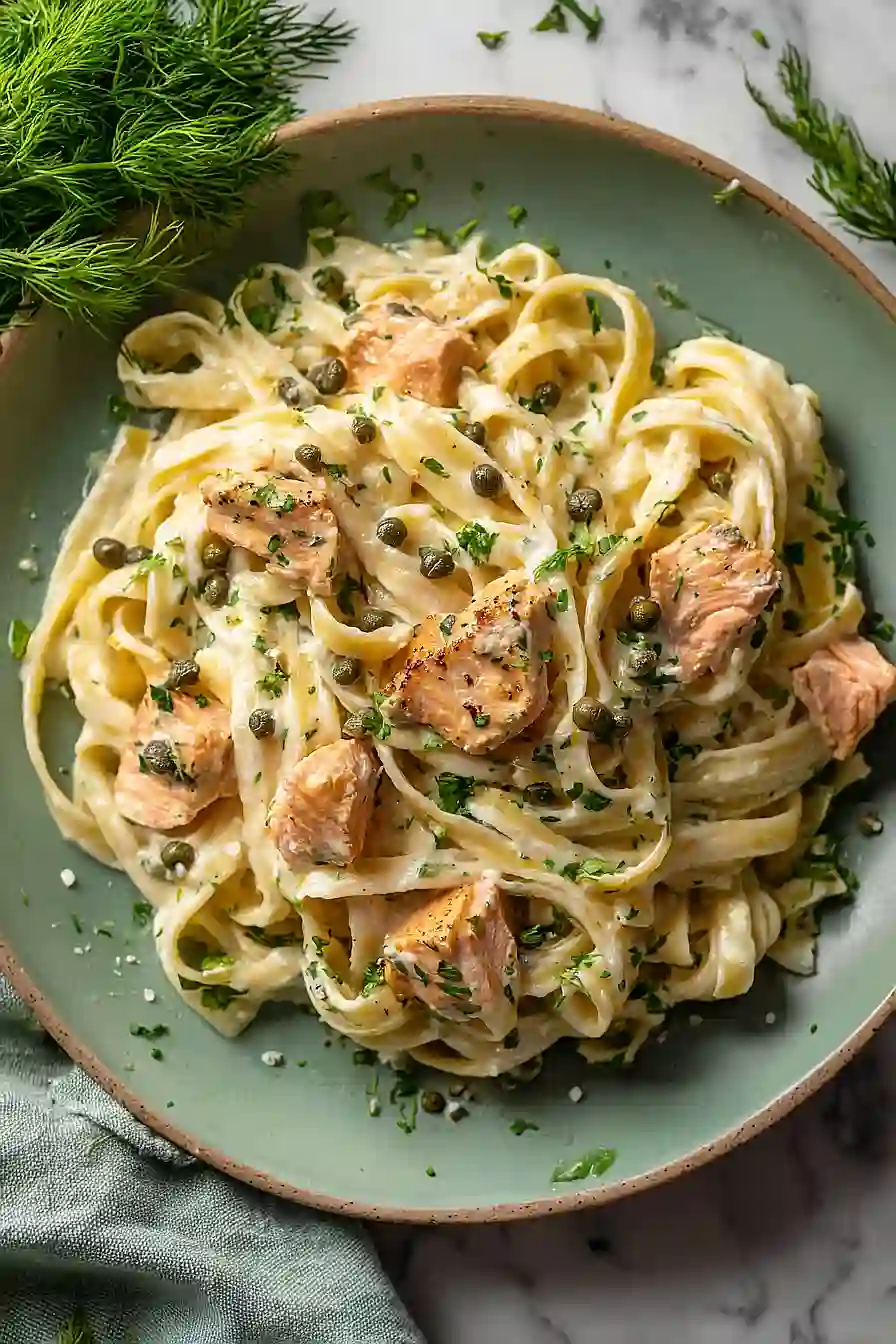
You can choose farm-raised or wild salmon for this recipe, and both will work great. If all you have access to is frozen salmon, don’t worry – that’ll work too. Most fresh salmon at the grocery store has actually been previously frozen right off the boat anyway. For this pasta dish, you’ll want to remove the skin before cooking since it won’t add much to the final dish and can get a bit rubbery when mixed into pasta. Just run your knife between the flesh and skin while the salmon is still raw, and it should come right off.
Options for Substitutions
This pasta dish is pretty forgiving when it comes to swapping ingredients:
- Salmon fillet: You can use other fish like trout or arctic char if salmon isn’t available. Smoked salmon also works great – just flake it in at the end without cooking it. For a budget-friendly option, canned salmon works too, though the texture will be different.
- Creme fraiche: Heavy cream or sour cream are good alternatives. If using sour cream, add it off the heat and stir gently to prevent curdling. Greek yogurt works in a pinch, but mix it with a bit of pasta water first to thin it out.
- Parmesan cheese: Pecorino Romano gives you a similar salty, sharp flavor. Grana Padano is another close match. In a pinch, any hard Italian cheese will do the job.
- Capers: If you’re not a fan of capers or don’t have them, try chopped green olives for that briny kick. You can also leave them out entirely – the dish will still taste great.
- Pasta: Any pasta shape works here, though long noodles like linguine, fettuccine, or spaghetti are traditional. Short pasta like penne or rigatoni will hold the sauce differently but taste just as good.
Watch Out for These Mistakes While Cooking
The biggest mistake you can make with salmon pasta is overcooking the fish, which turns it dry and chalky – since salmon continues cooking after you remove it from the oven, take it out when it’s still slightly translucent in the center and let it rest for a few minutes.
Another common error is adding the creme fraiche to a sauce that’s too hot, which can cause it to separate and look curdled, so make sure to lower the heat to a gentle simmer before stirring it in.
Don’t skip saving that pasta water – it’s liquid gold that helps the sauce cling to the noodles thanks to its starch content, and if your sauce looks too thick, add a splash more to loosen it up.
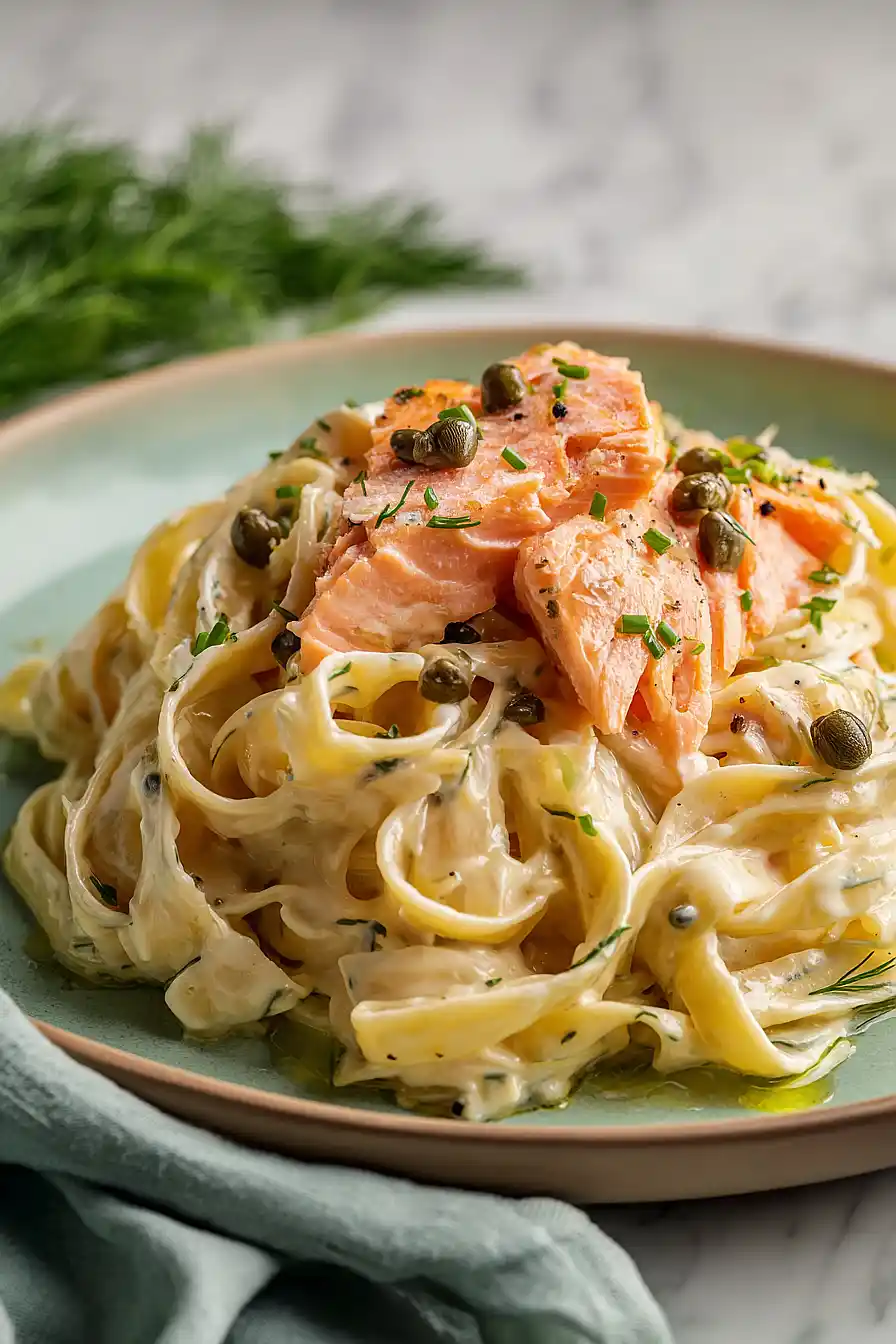
Finally, wait until the very end to flake the salmon and add it to the pasta, as stirring it in too early will break it into tiny bits instead of keeping those nice, chunky pieces intact.
What to Serve With Salmon Pasta?
This salmon pasta is pretty filling on its own, but a simple side salad really rounds out the meal. I like to throw together some mixed greens with cherry tomatoes, cucumber, and a light lemon vinaigrette that echoes the citrus notes in the pasta. A side of roasted asparagus or green beans also works great here, especially if you toss them with a bit of garlic and olive oil. If you want some bread on the table, keep it simple with a warm baguette or some garlic bread for soaking up any extra sauce left in your bowl.
Storage Instructions
Store: Keep any leftover salmon pasta in an airtight container in the fridge for up to 3 days. The cream sauce might thicken up a bit as it sits, but that’s totally normal with cream-based pasta dishes.
Reheat: Warm up your pasta gently on the stovetop over low heat with a splash of water or milk to loosen the sauce. You can also microwave it on medium power, stirring every 30 seconds. Just be careful not to overcook the salmon or it’ll get dry and flaky.
| Preparation Time | 15-20 minutes |
| Cooking Time | 25-35 minutes |
| Total Time | 40-55 minutes |
| Level of Difficulty | Medium |
| Servings | 2 servings |
Estimated Nutrition
Estimated nutrition for the whole recipe (without optional ingredients):
- Calories: 1150-1300
- Protein: 48-56 g
- Fat: 62-72 g
- Carbohydrates: 95-105 g
Ingredients
For the salmon:
- 1 salmon fillet (I use Ora King for superior marbling)
- 3/4 tbsp olive oil (or any neutral oil like avocado oil)
- salt
- black pepper
For the pasta and sauce:
- 8 oz pasta
- 1.5 oz unsalted butter (I prefer Kerrygold for a richer sauce)
- 1 tsp black pepper (freshly ground preferred for more flavor)
- 3 garlic cloves (finely minced for best flavor)
- 2/3 cup pasta water
- 1/2 cup creme fraiche (gives better texture and moisture than sour cream)
- 2.5 oz parmesan cheese
- 2 tbsp lemon juice
- 2 tbsp capers
- 3 tbsp chives
- 1 tbsp fresh dill, chopped
Step 1: Prepare Mise en Place and Start the Salmon
- 1 salmon fillet
- 3/4 tbsp olive oil
- salt
- black pepper
- 3 garlic cloves, finely minced
- 1 tbsp fresh dill, chopped
- 3 tbsp chives, chopped
Preheat your oven to 390°F.
While it heats, finely mince the garlic cloves and chop the fresh dill and chives—having everything prepped before you start cooking ensures smooth timing.
Place the salmon fillet on a baking tray, drizzle with olive oil, and season generously with salt and black pepper on both sides.
Once the oven reaches temperature, place the salmon in to bake.
Step 2: Cook the Pasta and Build the Sauce Base
- 8 oz pasta
- 1.5 oz unsalted butter
- 1 tsp black pepper, freshly ground
- 3 garlic cloves, finely minced
While the salmon bakes, bring a large pot of salted water to a boil and cook the pasta until just under al dente (about 1 minute before the package time suggests), then drain it while reserving 2/3 cup of pasta water for the sauce.
Simultaneously, melt the butter in a large skillet over medium heat, then add the minced garlic and freshly ground black pepper, cooking for about 1 minute until fragrant.
I like to use high-quality butter like Kerrygold here—it creates a noticeably richer, more luxurious sauce base that elevates the whole dish.
Step 3: Create the Creamy Sauce
- 2/3 cup pasta water
- 1/2 cup crème fraîche
- 2.5 oz parmesan cheese
- 2 tbsp lemon juice
- 2 tbsp capers
Pour the reserved 2/3 cup of pasta water into the pan with the garlic and butter, then bring it to a gentle simmer.
Stir in the crème fraîche (which gives a better texture and creamier result than sour cream) and simmer for about 1 minute to incorporate it smoothly.
Add the grated parmesan cheese and stir constantly until it’s completely melted and the sauce becomes silky and cohesive.
Finish by stirring in the lemon juice and capers for brightness and briny depth.
Step 4: Combine Pasta with Sauce and Flake the Salmon
- pasta from Step 2
- creamy sauce from Step 3
- salmon fillet from Step 1
Check that the salmon has finished baking (it should be opaque and flake easily with a fork, around 10-12 minutes).
Remove it from the oven and use two forks to gently break it into bite-sized pieces, discarding any bones or skin.
Add the drained pasta from Step 2 to the creamy sauce and toss gently over medium heat for 1-2 minutes to allow the pasta to finish cooking in the sauce and absorb the flavors.
Step 5: Plate and Garnish
- salmon pasta from Step 4
- flaked salmon from Step 4
- fresh dill, chopped from Step 1
- chives, chopped from Step 1
Divide the creamy salmon pasta between serving bowls or plates.
Top each portion with the flaked salmon pieces and finish with a generous sprinkle of the fresh dill and chives.
I find that adding the fresh herbs right before serving keeps them vibrant and adds a beautiful pop of color and freshness that really completes the dish.
Best Salmon Pasta
Ingredients
Method
- Preheat your oven to 390°F. While it heats, finely mince the garlic cloves and chop the fresh dill and chives—having everything prepped before you start cooking ensures smooth timing. Place the salmon fillet on a baking tray, drizzle with olive oil, and season generously with salt and black pepper on both sides. Once the oven reaches temperature, place the salmon in to bake.
- While the salmon bakes, bring a large pot of salted water to a boil and cook the pasta until just under al dente (about 1 minute before the package time suggests), then drain it while reserving 2/3 cup of pasta water for the sauce. Simultaneously, melt the butter in a large skillet over medium heat, then add the minced garlic and freshly ground black pepper, cooking for about 1 minute until fragrant. I like to use high-quality butter like Kerrygold here—it creates a noticeably richer, more luxurious sauce base that elevates the whole dish.
- Pour the reserved 2/3 cup of pasta water into the pan with the garlic and butter, then bring it to a gentle simmer. Stir in the crème fraîche (which gives a better texture and creamier result than sour cream) and simmer for about 1 minute to incorporate it smoothly. Add the grated parmesan cheese and stir constantly until it's completely melted and the sauce becomes silky and cohesive. Finish by stirring in the lemon juice and capers for brightness and briny depth.
- Check that the salmon has finished baking (it should be opaque and flake easily with a fork, around 10-12 minutes). Remove it from the oven and use two forks to gently break it into bite-sized pieces, discarding any bones or skin. Add the drained pasta from Step 2 to the creamy sauce and toss gently over medium heat for 1-2 minutes to allow the pasta to finish cooking in the sauce and absorb the flavors.
- Divide the creamy salmon pasta between serving bowls or plates. Top each portion with the flaked salmon pieces and finish with a generous sprinkle of the fresh dill and chives. I find that adding the fresh herbs right before serving keeps them vibrant and adds a beautiful pop of color and freshness that really completes the dish.