I never thought I’d be the person to turn cabbage into something my kids actually ask for seconds of. But here we are. This cabbage jambalaya has become one of those dinners I make when I need something hearty that won’t leave me standing at the stove for hours.
The thing I love most about this recipe is how it takes simple ingredients and turns them into a complete meal in one pot. No side dishes needed. No extra pans to scrub. Just throw everything together and let it do its thing. The cabbage soaks up all those smoky, spicy flavors from the sausage and tomatoes, and the potatoes make it filling enough that nobody’s raiding the pantry an hour later.
It’s not fancy, but it’s the kind of dinner that makes everyone happy. And on a busy weeknight, that’s exactly what I’m after.

Why You’ll Love This Cabbage Jambalaya
- One-pot wonder – Everything cooks together in a single pot, which means less cleanup and more time to relax after dinner.
- Budget-friendly ingredients – Using affordable cabbage and potatoes instead of traditional jambalaya ingredients makes this a wallet-friendly meal that still delivers on flavor.
- Ready in under an hour – You can have this hearty, filling dinner on the table in about 50 minutes, making it perfect for busy weeknights.
- Hearty and filling – The combination of sausage, rice, and vegetables creates a satisfying meal that will keep everyone full without needing any sides.
- Sneaks in the veggies – The cabbage softens and blends right into the dish, making it a great way to get more vegetables into your family’s diet without any complaints.
What Kind of Sausage Should I Use?
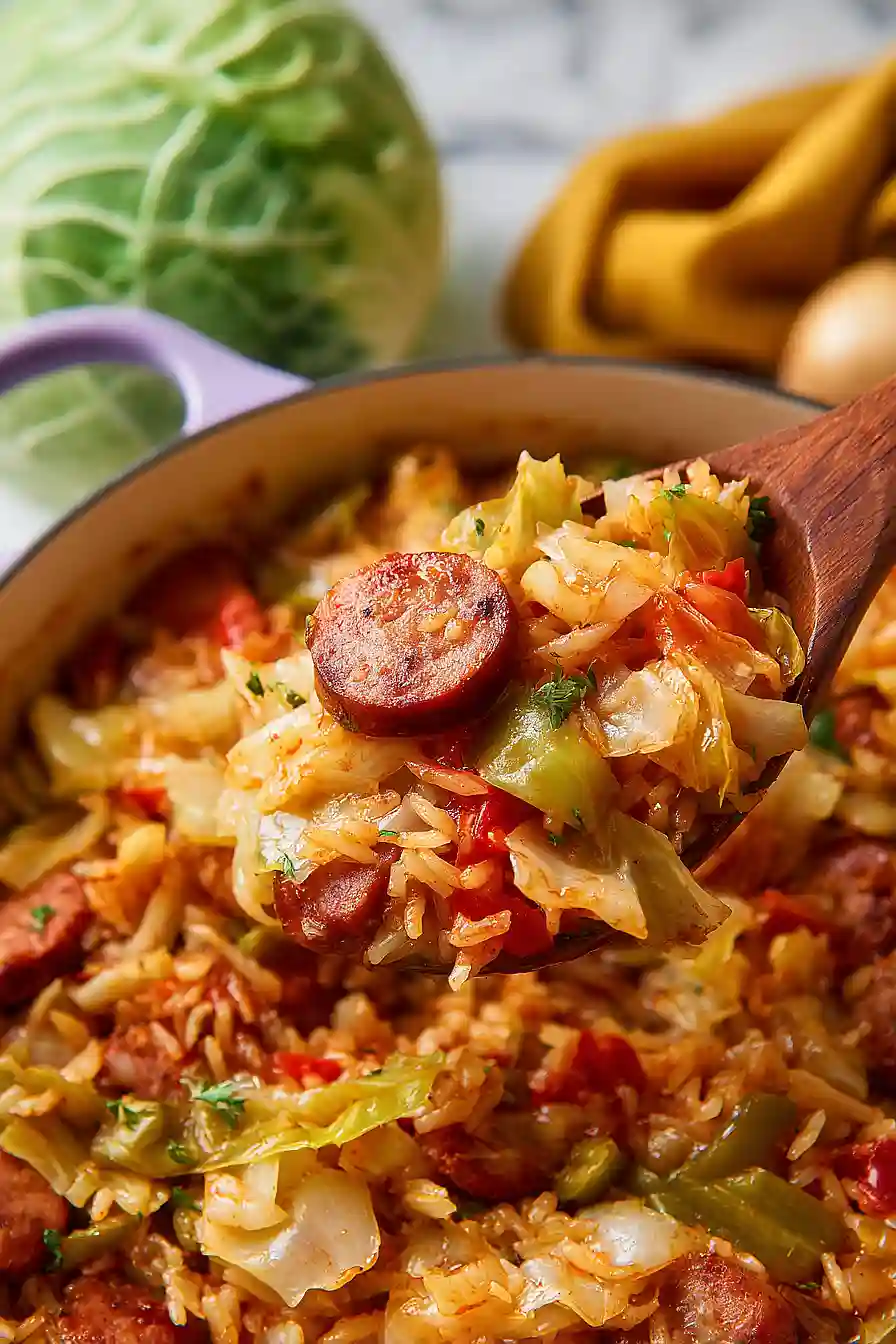
For cabbage jambalaya, andouille sausage is the traditional choice and brings that authentic smoky, spicy flavor that really makes the dish sing. If you can’t find andouille at your local store, kielbasa or smoked sausage are great substitutes that’ll still give you plenty of flavor. You can also use a spicy Italian sausage if that’s what you have on hand, though the flavor profile will be a bit different. Just make sure whatever sausage you pick is fully cooked or pre-smoked, since you’ll be slicing it up and adding it to the pot rather than cooking it from raw.
Options for Substitutions
This jambalaya is pretty forgiving when it comes to swapping ingredients:
- Sausage: Andouille sausage is traditional, but kielbasa, smoked sausage, or even chorizo work great. You can also use a mix of sausage and chicken for variety – just add the chicken at the same time as the sausage.
- Rice: Long grain white rice is best for this recipe and shouldn’t be substituted. Brown rice won’t cook properly in the same timeframe, and instant rice will turn mushy.
- Cabbage: Green cabbage is what you want here, but savoy cabbage works too. You could also use a mix of cabbage and bell peppers if you want to add some color.
- Beef broth: Chicken broth or vegetable broth work just fine as substitutes. The flavor will be slightly different but still tasty.
- Potatoes: Any potato variety works – russets, red potatoes, or Yukon golds. Just keep the pieces roughly the same size so they cook evenly.
- Diced tomatoes: If you only have whole canned tomatoes, just chop them up. Fire-roasted tomatoes add a nice smoky flavor if you have them on hand.
Watch Out for These Mistakes While Cooking
The biggest mistake people make with this jambalaya is not browning the sausage properly in the first step – you want a nice sear on the meat to build flavor, so resist the urge to stir it constantly and let it sit for a minute or two at a time.
Another common issue is adding too much liquid, which can turn your jambalaya into soup instead of a hearty one-pot meal, so stick to the measurements and avoid lifting the lid too often during the simmering process since this releases steam and affects cooking time.
To prevent mushy rice, make sure you’re using long-grain white rice rather than instant rice, and if your rice isn’t quite done after 40 minutes but the liquid is absorbed, just add a splash more broth and continue cooking.
Finally, cut your potatoes into uniform 1-inch cubes so they cook at the same rate as the rice – nobody wants crunchy potatoes in their jambalaya.
What to Serve With Cabbage Jambalaya?
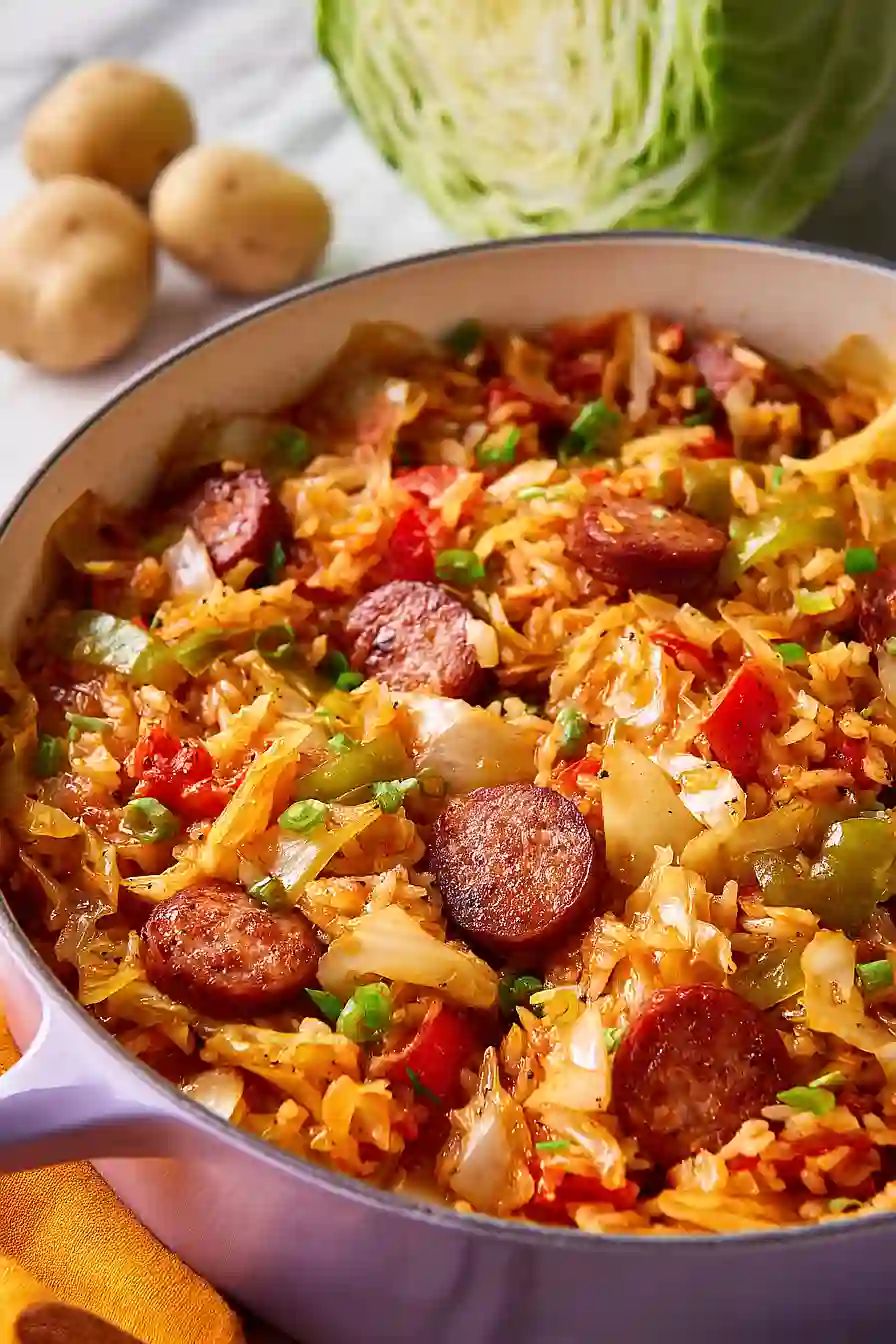
This hearty one-pot meal is pretty filling on its own, but I love serving it with some warm cornbread or crusty French bread on the side for soaking up all that flavorful broth. A simple side salad with a tangy vinaigrette helps cut through the richness of the sausage and adds a fresh crunch to your plate. If you want to keep things traditional, a side of collard greens or green beans seasoned with a bit of bacon would round out the meal nicely. For drinks, sweet iced tea or a cold beer pairs perfectly with the spicy, savory flavors in this dish.
Storage Instructions
Store: Keep your leftover cabbage jambalaya in an airtight container in the fridge for up to 4 days. The flavors actually get better as it sits, so it makes a great meal prep option for the week.
Freeze: This jambalaya freezes really well for up to 3 months. Let it cool completely, then portion it out into freezer-safe containers or bags. Just note that the potatoes might get a slightly different texture after freezing, but the flavor will still be there.
Reheat: Warm it up on the stovetop over medium-low heat with a splash of broth or water to loosen it up, stirring occasionally. You can also microwave individual portions for 2-3 minutes, stirring halfway through.
| Preparation Time | 10-15 minutes |
| Cooking Time | 40-50 minutes |
| Total Time | 50-65 minutes |
| Level of Difficulty | Easy |
| Servings | 8 servings |
Estimated Nutrition
Estimated nutrition for the whole recipe (without optional ingredients):
- Calories: 3250-3500
- Protein: 120-135 g
- Fat: 175-200 g
- Carbohydrates: 290-320 g
Ingredients
- 2 lb sausage (I prefer Hillshire Farm smoked sausage for this)
- 1 large onion
- 3 celery stalks
- 4 garlic cloves, minced
- 1 small head cabbage (roughly chopped into 1-inch pieces)
- 2 large potatoes (peeled and diced into 1/2-inch cubes)
- 29 oz diced tomatoes (I like Hunt’s for the best consistency)
- 8 oz tomato sauce
- 2 cups beef broth (I use Swanson for a deep, rich flavor)
- 1 cup rice
- 1.5 tsp salt
- 3/4 tsp black pepper
- 1/2 tsp red pepper flakes
- 1 bay leaf
Step 1: Prepare the Mise en Place
- 2 lb sausage
- 1 large onion
- 3 celery stalks
- 4 garlic cloves, minced
- 2 large potatoes
- 1 small head cabbage
Dice the sausage into 1/2-inch rounds, then finely chop the onion and celery stalks.
Mince the garlic cloves, peel and cut the potatoes into 1/2-inch cubes, and roughly chop the cabbage into 1-inch pieces.
Measure out all spices (salt, black pepper, red pepper flakes, bay leaf) into a small bowl.
Having everything prepped and ready will make the cooking process smooth and prevent overcooking any components.
Step 2: Build the Flavor Base with Sausage and Aromatics
- 2 lb sausage
- 1 large onion
- 3 celery stalks
- 4 garlic cloves, minced
Heat a large heavy-bottomed pot (at least 5-6 quarts) over medium-high heat.
Add the diced sausage and cook for 3-4 minutes, breaking it up slightly as it browns, until some fat is rendered and the sausage develops color.
Add the chopped onion and celery, cooking for 2-3 minutes until they begin to soften and become fragrant.
Stir in the minced garlic and cook for just 30 seconds to bloom its flavors without burning it.
This layered approach to building aromatics creates a deeper, more complex base than cooking everything together from the start.
Step 3: Add the Vegetables, Liquids, and Seasonings
- 29 oz diced tomatoes
- 8 oz tomato sauce
- 2 cups beef broth
- 1 cup rice
- 2 large potatoes
- 1 small head cabbage
- 1.5 tsp salt
- 3/4 tsp black pepper
- 1/2 tsp red pepper flakes
- 1 bay leaf
Pour in the diced tomatoes (with their juice), tomato sauce, and beef broth, then add the rice, diced potatoes, and chopped cabbage.
Sprinkle in the salt, black pepper, red pepper flakes, and bay leaf, stirring well to combine and distribute the spices evenly throughout the pot.
Bring the mixture to a boil over medium-high heat, stirring occasionally—this ensures the rice cooks evenly and the spices are fully incorporated into the liquid.
Step 4: Simmer Until Rice and Potatoes are Tender
Once the mixture reaches a boil, reduce the heat to medium-low, cover the pot with a lid, and simmer for 35-40 minutes.
The rice should be tender and have absorbed most of the liquid, and the potatoes should be fork-tender.
I like to give it a gentle stir around the 20-minute mark to prevent the rice from sticking to the bottom, but avoid stirring too much as it can make the rice mushy.
The jambalaya is ready when there’s just a small amount of liquid remaining and everything is cooked through.
Step 5: Rest and Serve
Remove the pot from heat and let it rest uncovered for 2-3 minutes—this allows the rice to finish absorbing any remaining liquid and makes the texture more cohesive.
Give the jambalaya a final stir, taste, and adjust seasonings if needed.
Remove the bay leaf, then ladle into bowls and serve hot.
Tasty Cabbage Jambalaya
Ingredients
Method
- Dice the sausage into 1/2-inch rounds, then finely chop the onion and celery stalks. Mince the garlic cloves, peel and cut the potatoes into 1/2-inch cubes, and roughly chop the cabbage into 1-inch pieces. Measure out all spices (salt, black pepper, red pepper flakes, bay leaf) into a small bowl. Having everything prepped and ready will make the cooking process smooth and prevent overcooking any components.
- Heat a large heavy-bottomed pot (at least 5-6 quarts) over medium-high heat. Add the diced sausage and cook for 3-4 minutes, breaking it up slightly as it browns, until some fat is rendered and the sausage develops color. Add the chopped onion and celery, cooking for 2-3 minutes until they begin to soften and become fragrant. Stir in the minced garlic and cook for just 30 seconds to bloom its flavors without burning it. This layered approach to building aromatics creates a deeper, more complex base than cooking everything together from the start.
- Pour in the diced tomatoes (with their juice), tomato sauce, and beef broth, then add the rice, diced potatoes, and chopped cabbage. Sprinkle in the salt, black pepper, red pepper flakes, and bay leaf, stirring well to combine and distribute the spices evenly throughout the pot. Bring the mixture to a boil over medium-high heat, stirring occasionally—this ensures the rice cooks evenly and the spices are fully incorporated into the liquid.
- Once the mixture reaches a boil, reduce the heat to medium-low, cover the pot with a lid, and simmer for 35-40 minutes. The rice should be tender and have absorbed most of the liquid, and the potatoes should be fork-tender. I like to give it a gentle stir around the 20-minute mark to prevent the rice from sticking to the bottom, but avoid stirring too much as it can make the rice mushy. The jambalaya is ready when there's just a small amount of liquid remaining and everything is cooked through.
- Remove the pot from heat and let it rest uncovered for 2-3 minutes—this allows the rice to finish absorbing any remaining liquid and makes the texture more cohesive. Give the jambalaya a final stir, taste, and adjust seasonings if needed. Remove the bay leaf, then ladle into bowls and serve hot.