Weeknight dinners shouldn’t feel like work. I’m always looking for meals that taste good but don’t leave me stuck in the kitchen for hours. That’s exactly why I keep coming back to foil packet dinners. Everything cooks together in one neat little package, and cleanup is basically non-existent.
This baked salmon and asparagus is one of those recipes I make when I need dinner on the table fast. The foil keeps everything moist while it bakes, and all those flavors from the garlic, lemon, and olive oil mix together perfectly. Plus, there’s something satisfying about opening up a foil packet at the table and having your whole meal right there.
Want a healthy dinner that doesn’t require much effort? This is it. Twenty minutes of prep, thirty minutes in the oven, and you’re done. No pans to scrub, no mess to clean up. Just good food that works for busy nights.

Why You’ll Love This Baked Salmon and Asparagus
- Ready in under 30 minutes – This recipe is perfect for busy weeknights when you need a healthy dinner on the table fast.
- Minimal cleanup – Cooking everything in foil packets means you’ll have practically no dishes to wash afterward.
- Healthy and nutritious – Packed with protein from the salmon and vitamins from the asparagus, this is a wholesome meal that’s naturally gluten-free and keto-friendly.
- Simple ingredients – You only need a handful of basic ingredients like olive oil, lemon, and garlic to create a flavorful dish that tastes like it came from a restaurant.
- Foolproof cooking method – The foil packets lock in moisture and flavor, making it nearly impossible to overcook or dry out your salmon.
What Kind of Salmon Should I Use?
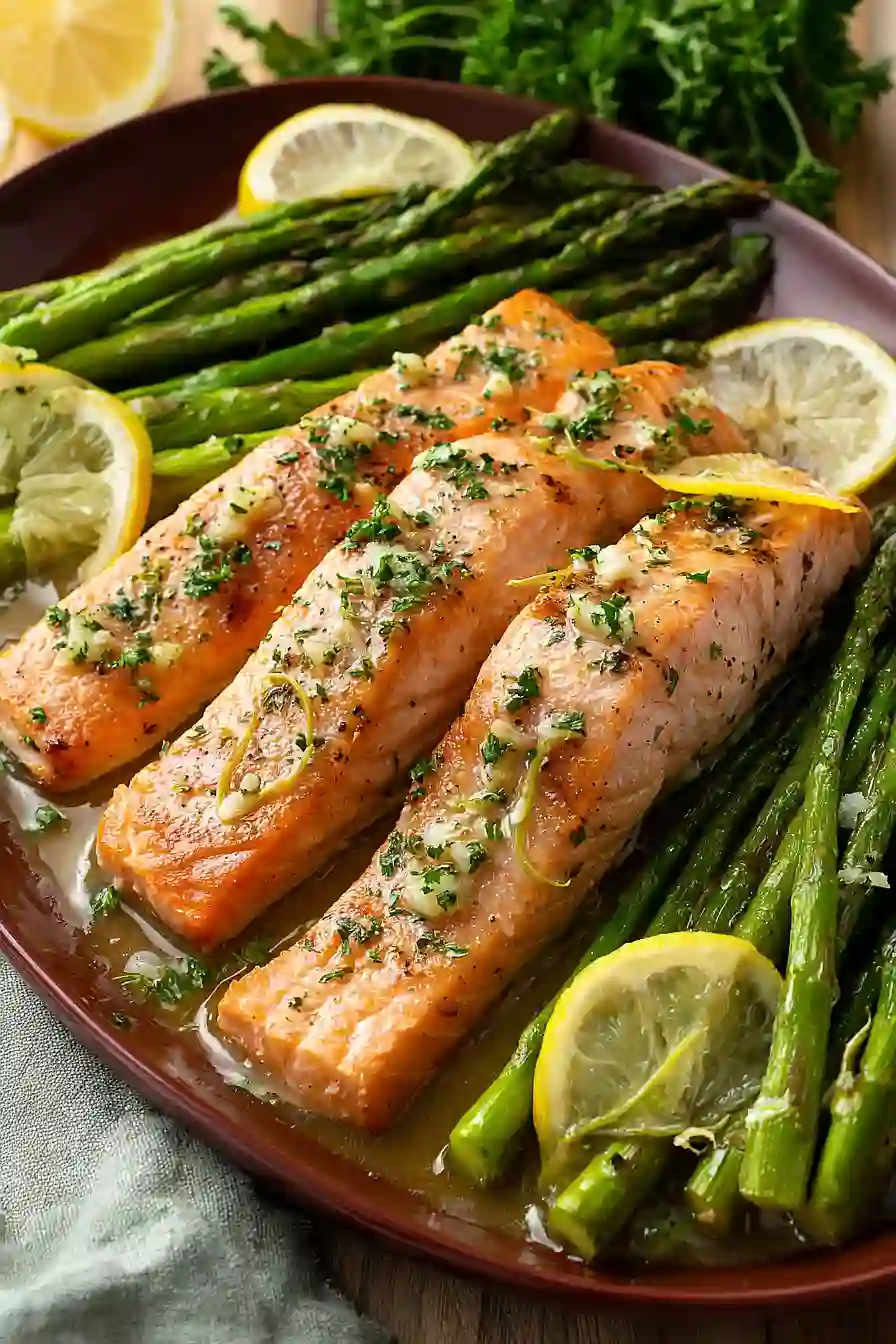
You can choose farm-raised or wild for this recipe, both will work. And, if all you have access to is frozen salmon, you’ll still be good to go. In fact, most fresh salmon at the supermarket has been previously frozen right off the boat. Just be sure it was handled properly by checking for any visible ice crystals or signs of freezer burn. For this recipe, you’ll want to use skinless salmon. Arguably the best thing about salmon skin is getting it nice and crispy. Since we’re cooking this salmon in a foil packet, that crispness won’t be achieved and so it’s best to do without it.
Options for Substitutions
This simple foil packet recipe works well with a few easy swaps:
- Salmon: Other fish fillets like cod, halibut, or trout work great here. Just adjust cooking time based on thickness – thinner fillets will cook faster than salmon.
- Asparagus: Green beans, broccoli florets, or sliced zucchini make good alternatives. If using broccoli, cut into smaller pieces so it cooks through in the same time as the fish.
- Olive oil: You can use melted butter, avocado oil, or even a light coating of cooking spray if you’re watching oil intake.
- Fresh lemon: Bottled lemon juice works in a pinch – use about 3 tablespoons. You can also try lime for a slightly different citrus flavor.
- Fresh parsley: Dried parsley (use 2 teaspoons), fresh dill, or fresh cilantro all work well. Dill is especially nice with salmon.
- Garlic: If you don’t have fresh garlic, substitute with 1 teaspoon of garlic powder mixed into the oil before drizzling.
Watch Out for These Mistakes While Baking
The biggest mistake when baking salmon in foil is overcooking, which turns perfectly good fish dry and chalky – salmon is done when it flakes easily with a fork and reaches 145°F in the thickest part, so start checking around the 12-minute mark rather than waiting the full 15 minutes.
Another common error is not crimping the foil edges tightly enough, which lets all the flavorful steam escape and prevents the salmon and asparagus from cooking evenly in their own juices.
To get the best results, make sure your asparagus spears are roughly the same thickness so they cook at the same rate, and trim off the woody ends before adding them to the foil packet.
If you want a little color on top, open the foil during the last 2-3 minutes of cooking and switch your oven to broil, keeping a close eye so nothing burns.
What to Serve With Baked Salmon and Asparagus?
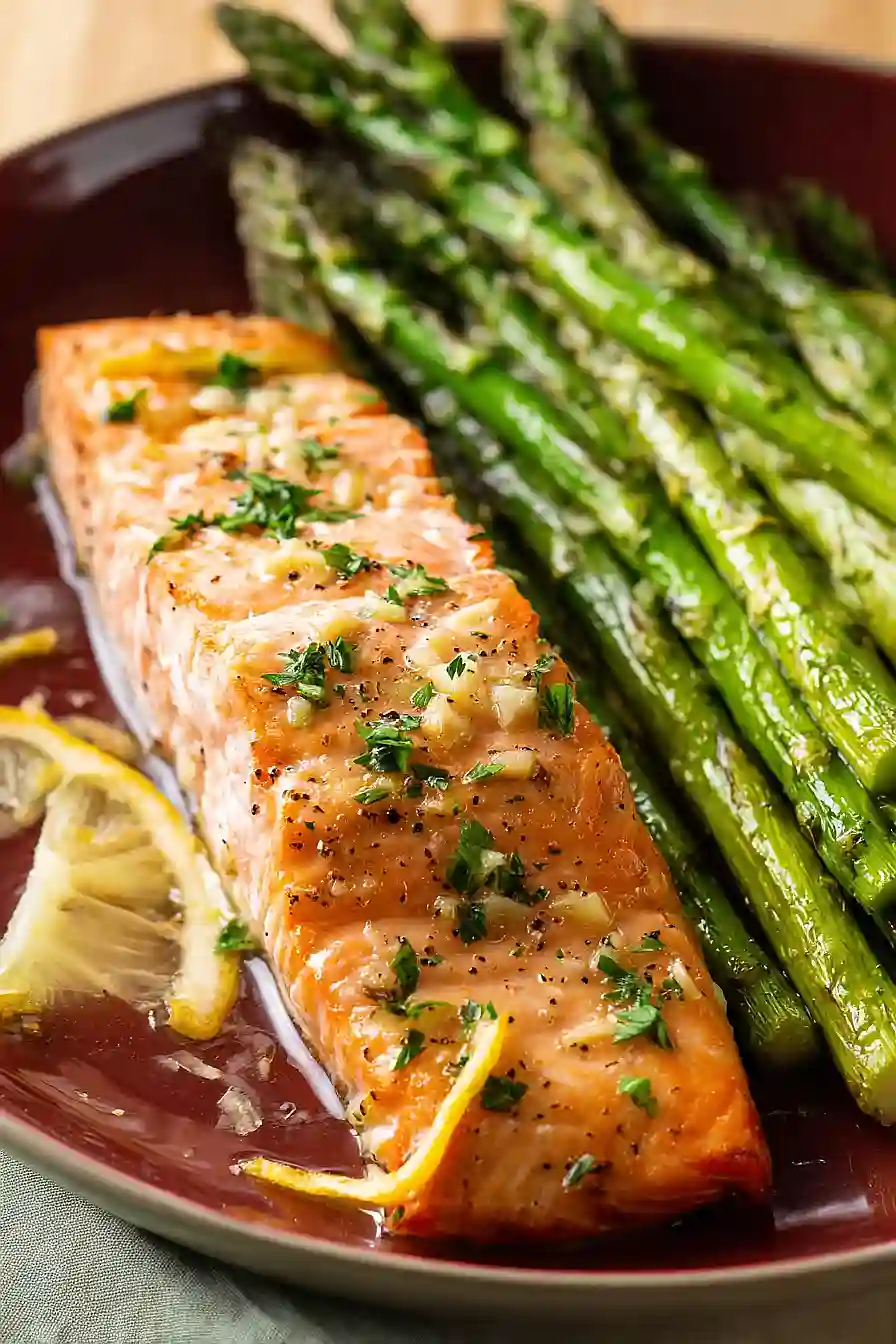
Since this dish already has your protein and veggies covered, I like to add a simple starch to round out the meal. Rice pilaf or roasted baby potatoes work great because they soak up all those lemony, garlicky juices from the foil packet. A light quinoa salad with cucumber and tomatoes is another good option if you want something fresh and easy. If you’re really hungry, some crusty bread on the side is perfect for mopping up any extra sauce left in the foil.
Storage Instructions
Store: Keep your leftover salmon and asparagus in an airtight container in the fridge for up to 3 days. The salmon stays moist and flavorful, making it perfect for quick lunches throughout the week. I like to flake it over a salad or eat it cold with some quinoa.
Freeze: You can freeze the cooked salmon separately from the asparagus for up to 2 months. The asparagus doesn’t freeze as well since it can get a bit mushy, so I’d recommend just freezing the salmon portions in freezer-safe bags or containers.
Reheat: Gently warm the salmon in the oven at 275°F for about 10-15 minutes, or microwave on medium power to avoid drying it out. The asparagus reheats nicely in a skillet with a tiny bit of olive oil for just a minute or two until warmed through.
| Preparation Time | 10-15 minutes |
| Cooking Time | 10-15 minutes |
| Total Time | 20-30 minutes |
| Level of Difficulty | Easy |
| Servings | 4 servings |
Estimated Nutrition
Estimated nutrition for the whole recipe (without optional ingredients):
- Calories: 950-1100
- Protein: 95-110 g
- Fat: 55-65 g
- Carbohydrates: 20-25 g
Ingredients
For the base:
- 4 salmon fillets (I prefer Wild Planet for sustainability)
- 1 bunch asparagus (trim about 1-inch off the woody ends)
For the seasoning:
- 4 tbsp olive oil (I always use Pompeian Robust selection)
- 1 lemon
- 6 garlic cloves (freshly minced for best flavor)
- 3/4 tsp salt
- 1/4 tsp pepper
- 2 tbsp fresh parsley
- 1/4 tsp smoked paprika
Step 1: Prepare Mise en Place and Preheat Oven
- 1 bunch asparagus
- 6 garlic cloves
- 1 lemon
- 2 tbsp fresh parsley
Preheat your oven to 400°F.
While it heats, prepare all ingredients: trim about 1 inch off the woody ends of the asparagus, mince the garlic cloves fresh (this makes a real difference in flavor compared to pre-minced), zest the lemon, and juice it into a small bowl.
Finely chop the fresh parsley.
Having everything ready before you start assembly ensures the salmon won’t sit uncooked while you’re prepping.
Step 2: Create the Herb Oil Mixture
- 4 tbsp olive oil
- lemon juice and zest from Step 1
- minced garlic from Step 1
- 3/4 tsp salt
- 1/4 tsp pepper
- 1/4 tsp smoked paprika
In a small bowl, whisk together the olive oil, lemon juice and zest from Step 1, minced garlic, salt, pepper, and smoked paprika.
Let this mixture sit for a minute—this brief rest allows the garlic to infuse into the oil slightly, distributing the flavors more evenly across the salmon and asparagus.
The oil becomes your flavor delivery system, so this step is crucial.
Step 3: Assemble Foil Packets and Add Topping
- 4 salmon fillets
- trimmed asparagus from Step 1
- herb oil mixture from Step 2
- 2 tbsp fresh parsley
Tear off four large sheets of heavy-duty foil (about 12 x 18 inches each) and place them on a baking sheet.
Divide the trimmed asparagus evenly among the four foil sheets, arranging them in the center of each sheet.
Place one salmon fillet on top of each asparagus bundle, skin-side down.
Divide the herb oil mixture from Step 2 equally among the four packets, drizzling it over the salmon and asparagus.
Sprinkle the fresh parsley over each packet.
Step 4: Seal and Bake Until Cooked Through
- assembled packets from Step 3
Fold the foil packets closed by bringing the long sides together and rolling them down tightly toward the fish, then fold in the short ends to create sealed packets—this traps steam inside for perfectly moist salmon.
Place the sealed packets on the baking sheet and bake for 12-15 minutes in your preheated 400°F oven.
The cooking time depends on the thickness of your fillets; thinner fillets may be done in 12 minutes, while thicker ones may need closer to 15.
Step 5: Check Doneness and Serve
Carefully open one of the foil packets (watch out for escaping steam!) and check if the salmon flakes easily with a fork and the asparagus is tender when pierced.
If not quite done, reseal and return to the oven for another 1-2 minutes.
Once cooked through, transfer each foil packet directly to a plate for a beautiful presentation, or carefully slide the salmon and asparagus onto individual serving plates.
The residual heat will continue cooking slightly, so don’t wait too long before serving.
Mouthwatering Baked Salmon and Asparagus in a Foil
Ingredients
Method
- Preheat your oven to 400°F. While it heats, prepare all ingredients: trim about 1 inch off the woody ends of the asparagus, mince the garlic cloves fresh (this makes a real difference in flavor compared to pre-minced), zest the lemon, and juice it into a small bowl. Finely chop the fresh parsley. Having everything ready before you start assembly ensures the salmon won't sit uncooked while you're prepping.
- In a small bowl, whisk together the olive oil, lemon juice and zest from Step 1, minced garlic, salt, pepper, and smoked paprika. Let this mixture sit for a minute—this brief rest allows the garlic to infuse into the oil slightly, distributing the flavors more evenly across the salmon and asparagus. The oil becomes your flavor delivery system, so this step is crucial.
- Tear off four large sheets of heavy-duty foil (about 12 x 18 inches each) and place them on a baking sheet. Divide the trimmed asparagus evenly among the four foil sheets, arranging them in the center of each sheet. Place one salmon fillet on top of each asparagus bundle, skin-side down. Divide the herb oil mixture from Step 2 equally among the four packets, drizzling it over the salmon and asparagus. Sprinkle the fresh parsley over each packet.
- Fold the foil packets closed by bringing the long sides together and rolling them down tightly toward the fish, then fold in the short ends to create sealed packets—this traps steam inside for perfectly moist salmon. Place the sealed packets on the baking sheet and bake for 12-15 minutes in your preheated 400°F oven. The cooking time depends on the thickness of your fillets; thinner fillets may be done in 12 minutes, while thicker ones may need closer to 15.
- Carefully open one of the foil packets (watch out for escaping steam!) and check if the salmon flakes easily with a fork and the asparagus is tender when pierced. If not quite done, reseal and return to the oven for another 1-2 minutes. Once cooked through, transfer each foil packet directly to a plate for a beautiful presentation, or carefully slide the salmon and asparagus onto individual serving plates. The residual heat will continue cooking slightly, so don't wait too long before serving.